
Electrifying Government Innovation With NYC DCAS' Keith Kerman
Published by VentureFuel Team on
Aug 12, 2026, 5:20:15 AM
What does it take to modernize one of the world's largest and most complex fleets while balancing public safety, operational reliability, and ambitious sustainability goals?
This week's VentureFuel Visionary is Keith Kerman, Deputy Commissioner for Fleet Management and the Chief Fleet Officer at the New York City Department of Citywide Administrative Services.
In this episode, Keith shares how New York City is transforming nearly 30,000 municipal vehicles through electrification, renewable fuels, intelligent safety technology, AI-enabled fleet management, and cross-sector partnerships.
He also explains why innovation in government is less about moving fast than building trust across hundreds of stakeholders, how public-private collaboration accelerates adoption, and why fleet operations deserve a seat at every strategic leadership table.
Whether you lead innovation, operations, sustainability, or transformation, this episode offers practical lessons on scaling change across highly complex organizations.
%20VFI%20Visionaries_Electrifying%20Government%20Innovation-1.png?width=760&height=428&name=Thumbnail%20(Podcast)%20VFI%20Visionaries_Electrifying%20Government%20Innovation-1.png)
Episode Highlights
- Leading the Largest Municipal Fleet in the U.S. – Keith shares how managing nearly 29,000 vehicles requires balancing unique operational needs while advancing citywide goals around safety, sustainability, and efficiency.
- How New York City Scaled Fleet Sustainability – He explains the three-part strategy behind New York City's fleet transformation, combining vehicle electrification, operational efficiency, and renewable fuels to reduce greenhouse gas emissions.
- Why Public-Private Partnerships Drive Innovation – He also discusses how collaboration with automakers, technology providers, and industry partners helps New York City pilot emerging technologies, accelerate adoption, and modernize fleet operations.
- Building Safer, Smarter Fleets with EVs and AI – The conversation explores how electric vehicles, intelligent safety technologies, telematics, and AI-powered fleet management are improving reliability and preparing cities for the future of transportation.
- Lessons for Cities Leading Large-Scale Transformation – Keith shares practical advice for municipalities looking to modernize their fleets, emphasizing cross-agency collaboration and a step-by-step approach to adopting sustainable transportation technologies.
VentureFuel builds and accelerates innovation programs for industry leaders. Contact us today to learn how we can help you unlock the power of External Innovation via startup collaborations to drive growth.
Click here to read the episode transcript
Fred Schonenberg
Hello, everyone, and welcome to the Venture Fuel Visionaries. I'm your host, Fred Schonenberg. I'm so excited today to be joined by Keith Kerman. Keith is the Deputy Commissioner for Fleet Management and the Chief Fleet Officer at the New York City Department of Citywide Administrative Services. He leads the largest municipal fleet in the United States, overseeing nearly 29,000 vehicles that support more than 50 city agencies, everything from the NYPD to the FDNY, Department of Sanitation, Department of Transportation.
He has more than three decades of public service and leadership, including 17 years with New York City Parks, and has built a career focused on modernizing government operations, improving public safety, and advancing sustainability at scale. Under Keith's leadership, New York City has become a national leader in fleet innovation, pioneering the adoption of electric vehicles, renewable fuels, intelligent safety technologies, and data-driven fleet management. His work demonstrates how governments can embrace innovation to improve operational efficiency and reduce emissions to better serve the millions of residents every day.
So today we're going to explore how one of the world's largest municipal fleets is navigating the transition to cleaner transportation, the role technology and AI are playing in modern fleet management, and how public-private collaboration is accelerating innovation and what other cities and organizations can learn from New York and their approach to building a safer and smarter and more sustainable future. Keith, thank you so much for joining us today.
Keith Kerman
Thank you, Fred. Great to be with you.
Fred Schonenberg
So you spent more than three decades working in the New York City government, and now as the city's Chief Fleet Officer. Can you break down the early stages of Keith? Like what drew you to public service? And what does leading New York City's fleet actually entail?
Keith Kerman
Well, I've had public service on my mind from early on. My father was a lawyer and World War II veteran. He encouraged me very much in this direction. My mother was a local politician. I had some compelling alternatives, to be honest. But, I got my heart set on joining public service. And then Henry Stern, the Parks Commissioner under Ed Koch and Rudy Giuliani brought me in. And I've been going strong ever since. 33 years now.
Fred Schonenberg
Well, I know when we first met, we had a fun talk about the Parks. Way back in the day, I got involved with the Parks, and it's such a cornerstone of what New York City is. So that's an incredible legacy. I'm curious, I mentioned in the intro 29,000 vehicles across so many different agencies. And you said in other press you've done, you said it's less like managing one fleet and more like managing 400 or 500 different businesses. Can you talk about how that operational diversity changes how you think about things like innovation?
Keith Kerman
Sure, absolutely. So New York City operates the largest municipal fleet program in the U.S. and one of the largest fleets in the country altogether. 30,000 city-owned vehicles, adding 10,000 contracted school buses, the largest school busing program, I believe, in the world. It's a large business, more than $1.3 billion in expenditures last fiscal year.
Just to give you some fun facts, 1,300 mechanics at over 110 repair locations, a quarter million work orders a year. We're the largest electric charging network in the state of New York, 2,600 ports. We're the second largest operator of fuel sites in New York State, second only to Exxon, with over 400 fuel stations. Over $600 million in vehicle and truck acquisitions last year. Try that at home. We service 55 agencies and offices. And, of course, our three primary customers, our three largest customers, are known throughout the world, the New York City Police Department, the New York City Fire Department, the New York City Department of Sanitation. Over 190 types of vehicles.
And it really is just hundreds and hundreds of different businesses. So you can't apply a one-size-fits-all to anything. We call it a fleet, but the truth is, it's all these different business operations, and you need to understand them, what their requirements are, how they function, and then bring your citywide commitments, whether it's sustainability, safety, efficiency, smart government, to them. But, you can't just say, well, we're doing electrification and not, and ignore what that means for policing and how it's different from fire services, sanitation services, transportation, and all the rest.
Fred Schonenberg
It's interesting. I think every client I've ever had and every guest, certainly on this show, has talked about the complexity of their organization and how that can be a challenge for making innovation happen. Yet, with everything you just said, New York City's fleet has transformed into one of the national leaders in sustainability. Do you have any lessons from trying to drive large-scale change, even with complexity and regulation and politics and all the things that come maybe in the way or just that are part of the overall equation?
Keith Kerman
Sure. Well, first, what have we done? So let's talk about what we've done in sustainability. In 2015, New York City committed, as part of the Paris Climate Accords, to achieve 50 by 25, 50% greenhouse gas reduction by 2025, one of those big Paris Climate Accord goals in a large operation. And a lot of people made those commitments, and we appreciate that. We support those commitments. A much smaller group actually went out and achieved that.
And what we did, we had a three-part plan. Electrify everything you can as soon as you can, and some things you can electrify now, some things you really can't. Implement efficiencies everywhere you can, design efficiencies, operating efficiencies. No matter what your propulsion system for your vehicles, the more efficient the better, right? I'm sitting and talking to you in a room with electric lights. Well, I can waste the lights if I keep them on when I'm not in the room, or I can turn them off. Even electricity efficiency matters.
And then our third strategy, get rid of fossil fuels and use biofuels. It began with biodiesel really almost 20 years ago in 2005, and now has moved to renewable diesel. And we don't use standard fossil diesel anymore. The New York City government fleet, your police cars and fire trucks, are all powered by used cooking oil and waste animal fats today. And that is the really first big entity in the East Coast to do that.
So all of those three things together, we achieved 50 by 25, and we're kind of on to 80 by 35 now. So that's kind of what we've done. How have we done it? Well, first, you know, policy matters, leadership matters. Every mayor that we have worked under has been supportive of these efforts, from Mayor Bloomberg onto Mayor de Blasio, Mayor Adams, and, of course, Mayor Mamdani, all of whom have pushed us forward on these efforts. It's really been across four administrations that our sustainability program has developed.
You need senior leadership, especially in these big organizations. New York City government is not an easy thing to wield and move forward, and if the leadership is not pushing in a direction, it's very tough to get there. They then have to be very practical in working with agencies. I do not shy away from pushing for sustainability and for safety and for other forms of innovation, but I have to recognize that my customers, my clients, and my partners have pretty important jobs.
The police department, the fire department, the sanitation department, these are extraordinarily important agencies that the city relies on 24 hours a day for its basic functioning, safety, and security. So we need to talk to them and relentlessly be engaged with them in addressing their questions, their issues, testing solutions, and being willing to back off once in a while. I do not view management and innovation as a zero-sum game. I want this and you will do this. No way, and you'd last about five seconds in this environment. More of a tug-of-war, right? There's always pushing back. There's always pushing, you're pulling forward. If the flag is coming your direction, then you're winning. And if you're making some progress and you're moving things forward, and we've had great agencies that have worked with us.
Give you just one example. Under Mayor Mamdani in April, we announced that we achieved 1,000 EVs in law enforcement, probably the single hardest place to electrify with the most challenging demands, yet we had made a major threshold. Most law enforcement agencies in the United States don't have a thousand vehicles. We now have 1,000 EVs. So we've been able to make a lot of progress. But, you have to be pragmatic and obviously delivering services is what we are here to do. So if your electric vehicle can't support effective delivery services, then you have to think it through.
Fred Schonenberg
One of the things that I think is really interesting is we talk a lot about innovation at scale never happens alone, right? You need to bring people along. And you did an excellent job of talking about the different agencies within the government and the sort of tug-of-war. I'm curious how important partnerships are outside of that world, whether it's startups or tech companies or the private sector, in terms of helping you achieve some of the goals and aspirations that you all had.
Keith Kerman
Oh, absolutely important. The fleet depends on the private sector. DCAS is a great agency, but we do not manufacture vehicles. We do not manufacture auto parts or safety solutions. We do not produce our own fuel, although we do have some solar carports, 160 freestanding solar carports. So I guess we do produce a little of our own energy, but we didn't build the solar carports.
Fred Schonenberg
Right.
Keith Kerman
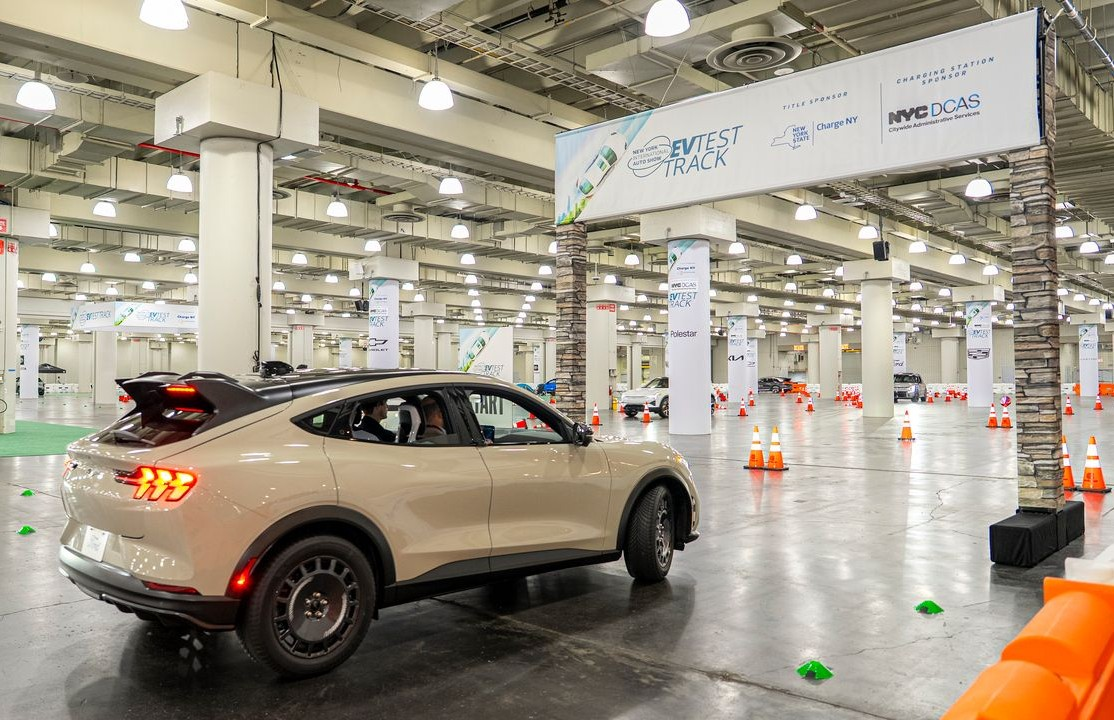
So we need innovation in the private sector. And if we want to achieve our major sustainability goals, we need a healthy fleet industry that's committed to sustainability, that's innovating and investing in this area. So we do what we can to support that. We host an annual fleet show in May at the Flushing Meadows Corona Park where the U.S. Open Tennis is. 200 companies come every year, displaying the latest innovations. We don't charge them at all.It's all for free. We ask them to cook some hot dogs for the general public.
But other than that, we're giving them that opportunity and we bring all the major nonprofit and municipal and authority customers. And there's a lot of money being spent. Just to give you a little reference point, DCAS, my own agency, spends $600-plus million a year buying vehicles and equipment. So these companies have business here that they're working towards.
We also, in every one of our interagency management meetings, we let two companies come and present quick 15-minute presentations. But we recognize that innovation in this industry is critical to everything we're doing. All our innovations come from the private sector, whether it's electric vehicles, hybrid vehicles, biofuels, intelligence, speed assist, surround cameras, high vision trucks, all the things we're trying to do in sustainability and safety are coming from the industry. So we are regularly partnering with the industry. We're not shy to embrace them. We're not shy to pilot innovations.
Fred Schonenberg
One of the things I think is interesting is this thread of partnership. And you all announced that New York City and Los Angeles County created the first ever Bicoastal Fleet Accord, which brings together two of the country's largest public fleets. I'm curious if you could talk about what prompted that partnership and how combining the sort of what you both do so well will continue to move the market forward.
Keith Kerman
Absolutely. So look, I don't think it's a secret to say that there are some headwinds in the electric vehicle and sustainable industry in the United States. And we all know that's coming from federal policy. That's no secret. And so we work with cities from throughout the United States. We did events so far with Philadelphia this year and with Baltimore. Obviously, we're going to talk about Los Angeles, with Montreal in Canada, with London in Europe, with Toronto also.
The fleet's an international industry, right? And so trends in one place impact trends in another. So in our other conversations with Los Angeles and New York City is the largest city in America, Los Angeles County with 88 cities is the largest county in America. Obviously, we represent the two coasts that are so committed to sustainability. And in our conversations, we've been pushing ourselves. What can we do to do better, to do more, to have more of an impact and to make clear to this industry and to the general public that we are in sustainability. We are in for smart transportation for the long term.
And from that became this Bicoastal Partnership. It's already moving forward. We met with our first manufacturer together last week. We have a number of educational efforts that are going together. Our nonprofit organizations, the nonprofit Clean Cities, are now working together out of Los Angeles and Empire Clean Cities. And I'll be on a plane tomorrow morning to California to keep it all moving forward.
Fred Schonenberg
So what about for some of the cities that are listening that are earlier in their journey? Obviously, fleet electrification is a major opportunity for everybody. What advice would you have for those municipalities that are just at the beginning stages?
Keith Kerman
Okay. So, on one hand, the big fleets, New York, LA, can make an impact. They can do a lot of splashy things. They can get press and public coverage. But the vast majority of fleets and vehicles out there tied into fleets are part of small fleets, two vehicles to 20 vehicles, and that's most of the fleet industry.
And there's a lot you can do. A hybrid vehicle. Well, I mentioned we're moving forward and we're trying to break through in electric vehicles for policing. The fact of the matter is the standard police car for New York City is a hybrid. The Ford Interceptor Hybrid is our standard car. Well, most police fleets are not even implementing hybrids yet. In a hybrid, you don't need the charging infrastructure. You don't need to rethink how to drive the vehicle. And by the way, I'd just save you money on fuel and maintenance. Right? And they're great cars. So just starting with hybrids where they make sense, or if you have non-emergency light and medium duty vehicles, go electric there.
We are finding there's a complete payback, return on investment. These electric cars are saving 60 to 70% on maintenance. You're obviously saving enormously on fuel and never more so than today, this week, this year, when fuel pricing is out of control and went down a little bit, now it's way back up, maybe down to yesterday. But fuel pricing is enormously up. And I will say something. They're not just… they're cleaner air and that's a really great thing. I don't know about you, but I breathe oxygen and air every day. They're lower maintenance. They're saving money on fuel. There's also something else. They're great cars. Get people, if you're in an organization with a fleet and you're not sure about these cars yet, drive them.
I have never put anyone in an electric car, anyone, including some people who really didn't think they liked them and did not love the car. They're fun drives, the cars to drive. They are quiet. They're very performance oriented. Zero torque means these are very, very powerful cars. So you have this idea that they're somehow weak or ineffective cars. The opposite is true. And one thing about EVs, unlike other medicines that we all have to take, they will sell themselves and they will promote themselves.
So I really think there are some easy wins out there. It's how we began, right? I'll be the first to tell you that electric trucks are still in their infancy. They're still more challenging. They're expensive. There are more issues about reliability. I would not encourage a fleet that had light, medium and heavy duty vehicles to start on the heavy duty side. But on the light and medium duty side, which is, by the way, most of the vehicles out in our country are sedans, SUVs, pickups and vans. That's like most of what's out there. The EVs are really mature and they're great.
Fred Schonenberg
Yeah. So Keith, one of the things, the government is not known for moving fast, right? And yet you all have been consistently recognized as an innovation leader. How do you build that culture of wanting to innovate, try new things, move everything forward while also having to balance public accountability and risk and the things that are obviously there as well?
Keith Kerman
Sure. So, in the fleet industry, for fleet professionals, day one, job one, is providing reliable fleet services to all your customers. And in our case, our customers are pretty important organizations like police, fire, sanitation, transportation, DEP, who are keeping this city safe and functioning 24 hours a day. And we never lose sight of that. That everything we do, the vehicle's got to work. We have to be fueling them, supplying services and making sure agencies are able to function.
That said, while there's a lot of internal pressure on the fleet to deliver those services internally, there's also a lot of external pressure on issues like sustainability, right? There's a lot of pressure on safety. You may remember Mamdani made an important safety announcement just last week. There's some pressure on smart government, governance, pressure on emergency preparedness, pressure on making sure the vehicles are not being misused and abused, right? Stories about the misuse of city vehicles or corruption involving these kinds of resources can undermine us enormously. So there are a lot of pressures, right? There's no question service pressures are number one, but all these pressures. And so you balance them.
And one of the things that's interesting is it's not a zero-sum game where you have to work on services so you can't work on sustainability or we're focusing on safety, but this other stuff has to be put aside. These things kind of go together. And let me give you just a few examples. Electric and hybrid vehicles dramatically reduce vehicles out of service. We published a report, which your listeners can find, 70% reduction in vehicles out of service tied to electric vehicles. And that makes sense. You don't have the engine, the transmission. You don't have the fuel lines, the catalytic converter to be stolen. Everybody likes to steal these things, especially in the hybrid vehicles, right? So sustainability can go together with service reliability. Every time you're in a crash, that is taking your vehicle out of service. That’s costing you money. That might be taking your employee out of service.
So safety also disrupts core operations. We implemented renewable diesel. So on one hand, renewable diesel is about greenhouse gas emissions, right? And that's somewhat theoretical. We're reducing greenhouse gas emissions in the production cycle. Okay, it doesn't seem that impactful for individual operators. However, renewable diesel has no smell and no aromatics, no benzene, no carcinogenic forming chemicals.
And so our drivers, and there are over 20,000 commercial drivers in our operation are not just getting cleaner fuel, and it's an interesting fuel, it's a clear liquid. All the stink and smell that they've spent their lives around. When you're a commercial driver or a mechanic, you live in this world of stink caused by diesel fuel. It's all gone. And that's not just aesthetic. That stink caused cancer. So on one hand, renewable diesel is about greenhouse gas emissions. On the other hand, it might've been one of the most important workplace health and safety initiatives since banning smoking in government buildings. So these things can come together and reinforce each other.
Fred Schonenberg
One of the things I want to kind of end on here is the advancements in technology. So AI is probably the number one thing that gets talked about on this show, but electrification, automation, connected infrastructure, there's so much happening. If you look out over the next five to 10 years, what do you think is going to have the biggest impact on municipal fleet operations?
Keith Kerman
Well, I think electrification is probably the most broadly impactful initiative. And the reason I think that is because all the other initiatives tie into it incredibly well. So we already talked about how electrification reduces maintenance costs. So that reinforces an issue. On super hot days, and we're in a really hot summer, electric and hybrid vehicles are more resilient. They don't break down. They don't overheat and go out of service in the way that combustion vehicles do.
But also the other technology solutions and IT solutions and automation solutions go perfectly with electric cars, right? Most of our self-driving car companies, whatever you think of self-driving cars at this juncture, are electric vehicles. And there are reasons for that. A lot of the safety technologies that we're trying to put in place, New York City and DCAS is a world leader in something called intelligent speed assist. And that's basically designing a car so it stays to the speed limit wherever that car is operating. It's kind of the old speed governor tied to new telematics. And Mayor Mamdani just announced an executive order about that on Thursday. You can take a look at that.
We led the development of intelligent speed assist with our electric GM boats. And they worked great together. And we published a report on all of that with the United States Department of Transportation. So I think electrification has so many great benefits that go beyond the really great and important benefit of being zero emissions and not pumping out a lot of garbage every day from the tailpipe. But it also, if you think automation and AI and connected infrastructure are the future, well, EV is the perfect platform for all of it.
Fred Schonenberg
Super interesting. Keith, this is our rapid fire end here. What's the most interesting vehicle in the New York City fleet?
Keith Kerman
Well, I probably should say the road zipper or the mobile barrier system of the Department of Transportation. We actually have this vehicle that can quickly move Jersey barriers. And you should Google it. It's really fascinating. But I will tell you, it's the electric puppet mobile. We have the one, probably the only puppet mobile out there. And Deke has just electrified it in partnership with New York City Parks. And it's an incredibly fun operation.
Fred Schonenberg
All right, we'll have to post a photo of that. 20 years from now, what do you hope your legacy will be?
Keith Kerman
Well, you know, I'm likely the first chief fleet officer in the nation, certainly the first Chief Fleet Officer in New York City. I'm probably the only one in the nation, one of the few, if only in the world. And while we've been talking about sustainability and environmental issues, and look, I'm a guy who came out of parks. I spent 17 years running park operations. Sustainability and the environment matter enormously to me and are probably my biggest commitments.
But I think to some extent, my legacy is going to be putting fleet and fleet operations on the map altogether. Raising the importance of fleet in organizations, not just government organizations, but companies all over. What did we all discover during COVID? How important those van and van operators were to our ability to live our lives. And suddenly people we took for granted were all celebrating and cheering for them. Well, we should keep cheering for them.
So I think, fleet is so important in how we function, how we provide services, our environmental issues, our safety issues, our fiscal issues, our emergency response. And so I hope that I've kind of raised the profile of the fleet and it'll help other fleet operators around the country argue for resources, argue for a place at the table.
Fred Schonenberg
Well, first, thank you for taking the time to talk with us. Second, thank you for all you're doing to spark change. I can say as a New Yorker, after meeting you, I was walking down the street with my son and we were in Prospect Park in Brooklyn and we saw a line of cars that were vehicles. They were Parks, department cars, and they were all electric. And I told my son the whole story and he just looked at me, he's six, he goes, dad, that's so cool. And I was like, yes. So I know that anybody from New York listening is now gonna see the city in maybe a different light than they do day-to-day as they're commuting.
Keith Kerman
Can I tell you, I gotta tell you stories since you mentioned Prospect Park. Very early on, and in many ways, I always consider this my own epiphany on sustainability in parks. I'm in Prospect Park with their borough commissioner at the time, Julie Spiegel, and it's early in the morning and we're watching a ball field and they're all playing. And then suddenly the parks department garbage truck comes driving by and it's spewing so much soot and pollution that they stopped the game and they all stopped the play and they all went away. And I'm like, that is not what we're supposed to be doing out here. And I think that began my… we gotta clean this whole fleet up. And I'm proud to say Parks operates nearly 1,000 all electric, not even plug-in hybrids, all electric vehicles today and we're growing that fleet.
Fred Schonenberg
Yeah, well, I can say it's because my son plays there every weekend and we do not see that any longer. So thank you for making that change on a personal level, but thank you for making the time today.
Keith Kerman
All right, thank you very much, Fred. Great to be with you.
VentureFuel builds and accelerates innovation programs for industry leaders by helping them unlock the power of External Innovation via startup collaborations.
Tags:
Innovation,
AI,
Government,
VentureFuel Visionaries,
Podcast,
Smart Cities,
Government Innovation,
Clean Transportation,
Fleet Sustainability,
New York City Fleet,
Fleet Electrification,
Fleet Innovation,
Sustainable Transportation,
Renewable Diesel,
Government Technology