
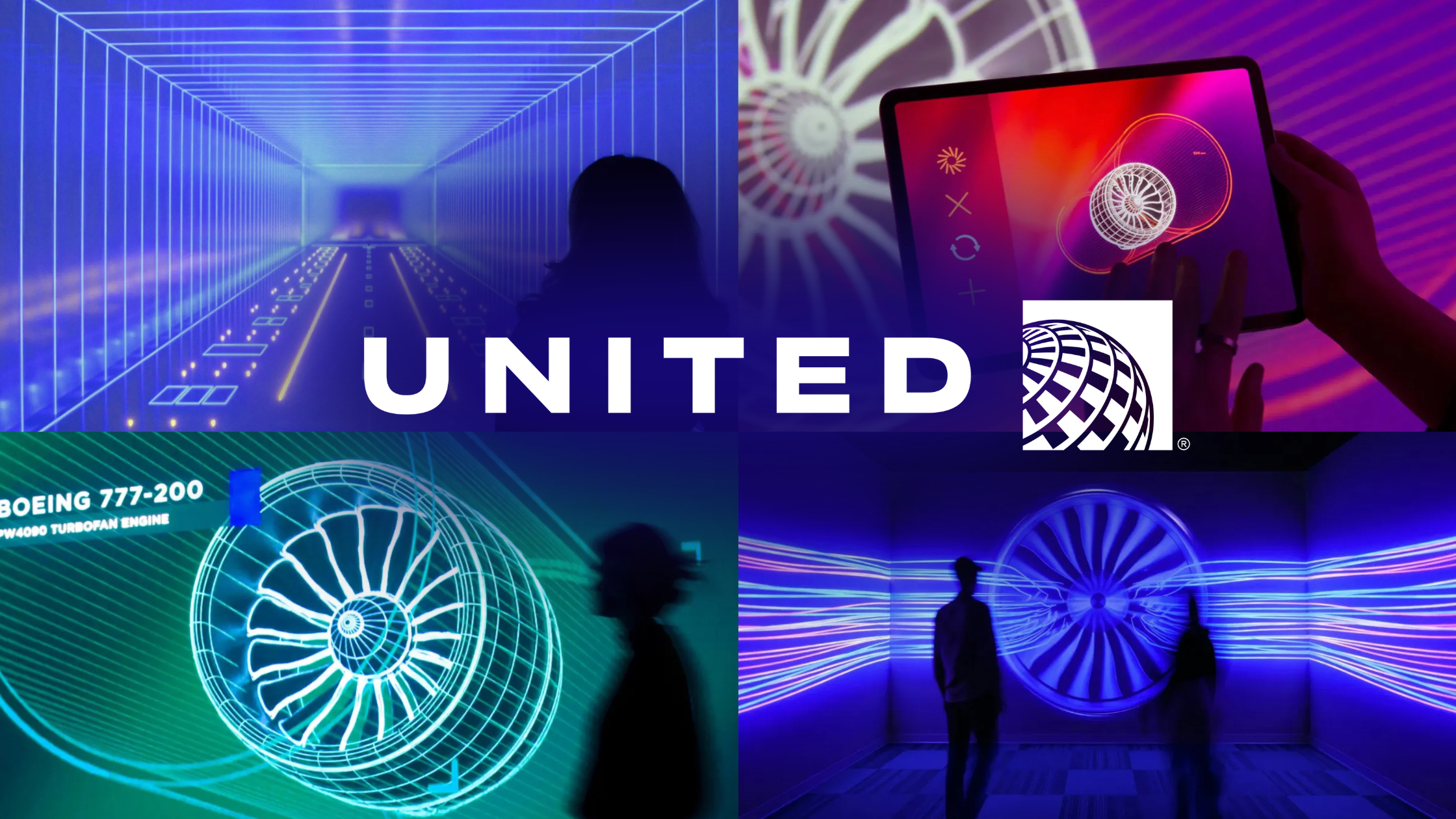
Innovation at 35,000 Feet With United Airlines' Head of Airshop Innovation Lab Jorie Sax
Published by VentureFuel Team on
Jul 15, 2026 11:00:03 AM
How do you create the runway for innovation inside one of the world's largest airlines?
This week's VentureFuel Visionary is Jorie Sax, Head of Airshop Innovation Lab at United Airlines.
In this episode, Jorie shares how her team explores emerging technologies years before they're ready for scale while balancing safety, trust, and operational excellence. From why the best innovations are often invisible to how AI can create more human experiences and why startups win through relentless focus, she also offers a masterclass in moving bold ideas beyond the pilot phase and into enterprise impact.
Whether you're leading innovation, transformation, or venture partnerships, this episode is full of practical lessons for scaling what matters.
%20VFI%20Visionaries_Innovation%20at%2035%2c000%20Feet.png?width=760&height=428&name=Thumbnail%20(Podcast)%20VFI%20Visionaries_Innovation%20at%2035%2c000%20Feet.png)
Episode Highlights
- Human-Centered AI in Travel – Jorie explains that AI should enhance, not replace, human experiences. The greatest opportunities come from using AI to deliver more personalized, accessible, and caring customer interactions.
- Scaling Innovation Through Collaboration – Rather than innovating in isolation, she emphasizes bringing business teams, technology partners, and stakeholders into the process from the start.
- Innovation Without Compromising Safety – Jorie explains that responsible innovation strengthens reliability by validating new ideas before they reach customers, especially in a highly regulated industry.
- Why Startups Create Strategic Advantage – The conversation explores why startups are valuable partners for large enterprises. Their deep focus, speed, and willingness to solve a single problem exceptionally well allow corporations to access breakthrough thinking.
- Accessibility as the Future of Customer Experience – Jorie highlights accessibility as one of travel's biggest innovation opportunities. Emerging technologies can remove barriers, create more inclusive journeys, and deliver richer experiences that benefit all travelers.
Click here to read the episode transcript
Fred Schonenberg
Hello everyone, and welcome to the VentureFuel Visionaries. I'm your host, Fred Schonenberg, and I am so excited today to be joined by Jorie Sax. Jorie is the Head of Airshop Innovation Lab at United Airlines. She leads United's efforts to explore emerging technologies and reimagine the future of travel, customer experience, and operational innovation.
She was recognized by CX Network as one of the top 40 future of CX leaders globally. She's known for her work at the intersection of human-centered design, AI, accessibility, and innovation. And through Airshop, she's helping one of the world's largest airlines explore how technology can create more seamless, personalized, and meaningful experiences for travelers.
We were just joking before we hit record about this concept I'd heard before of your head in the clouds and your feet on the ground. She is literally doing that, which is really exciting. And in this conversation, we're going to discuss the evolution of customer experience in aviation, how AI is changing travel, and what large organizations can learn from startups, as well as maybe what the future of flying is going to look like as we go out into the beyond. So please join me in welcoming Jorie to the show. Jorie, it's so nice to have you.
Jorie Sax
Thank you for having me. I'm very excited. And believe it or not, even with the visual, my feet are on the ground, but visually and digitally, I can have a little bit of fun and be in a flair seat.
Fred Schonenberg
I love it. I was like, wow, you have like some sort of insight. You could actually like run the wifi from the air and have a video connection. This is very, very rare.
Jorie Sax
Well, with our new Starlink, we do have very high speed wifi gate to gate, but we're not taking calls just yet on board. So I am definitely on the ground.
Fred Schonenberg
I love it. I also think that's a good thing. I can't imagine being on an airplane where everybody is doing a video call at the same time. It sounds like a pretty tough experience for everybody else.
Jorie Sax
Yeah, yeah. I personally love to zone out and not work and catch up on whether it's a book or a movie or sleep, but I can understand the temptation to want to stay connected in that way, even 35,000 feet in the air.
Fred Schonenberg
Yeah, no doubt, no doubt. So for people that might not be familiar with your work, how do you describe what Airshop Innovation Lab does within United?
Jorie Sax
Yeah, so what Airshop does is really inspire people to think differently and drive long-term strategy innovation through emerging tech. We're a team of 12, 100% dedicated to exploring technology three to five years out in maturity, test and learn through R&D or research and development, identify the big bets in technology that we should spend our time and resources on, and ultimately influence the purchasing decisions that will make us the number one airline in aviation history.
Fred Schonenberg
I love it. United operates in arguably one of the most highly regulated safety-critical industries in the world. So how do you balance encouraging experimentation and innovation without compromising reliability, trust, and all the things that are crucial to your business and the industry?
Jorie Sax
Yeah, I get this quite a bit. And the first thing that I always want to focus on is how important safety is. So we have four core values. Our first and most important is safety. The others are caring, dependability, and efficiency. But safety is paramount to everything we do. It always has been. And so for decades and decades and decades, everything that we do, everything that we launch is always with safety in mind. And I think there's a misunderstanding that innovation, because it's new, is inherently risky or unsafe. And I don't think that that's true. It certainly doesn't need to be true if done right.
What we do is help ensure that there are runways pun intended, in order to scale. And we do that through controlled environments, simulated environments sometimes, in order to test and then retest and then slowly ramp up to scale and always have fallbacks. That doesn't matter whether it's new and emerging technology or it's skilled technology that is inherently known and even already deployed but just being enhanced. That is a process that we've always undertaken. And that's something that my team actually helps enable through its tools and capabilities.
The second piece is really that focus around trust. Having trust really means consistency, transparency in what you're delivering and always offering more value than what we're expecting of customers. When customers are feeling supportive, then innovation isn't challenged so much as it's embraced and trusted.
Fred Schonenberg
I love that. I think one of the things that's interesting… I wrote down like a myth buster, right? This sort of concept of startups doesn't have to be unsafe. If you get the right guardrails, right? It's a new solution, which might actually be safer than the existing solution. But a lot of people think garage and break stuff fast which is not the case for most good startups. I'm curious…
Jorie Sax
If you're doing it right, you're breaking stuff and failing fast very early on in the development process. And you have fail-safe end processes involved and you're not overlooking or avoiding what's really critical and ultimately important to SOP regardless of what you're innovating.
Fred Schonenberg
I love that. I agree. And one of the things we end up fighting a lot at VentureFuel is this, what I would call pilot purgatory. This idea of everyone gets excited by a shiny new technology. They wanna try it. It actually is successful in the pilot environment. And then you start to look for how to scale this and everyone sort of goes back to their day job. I'm curious how you approach that within your group sort of thinking maybe with the end in mind or how to get this to deliver a meaningful impact to United.
Jorie Sax
Well, I think the key is not creating silos when you are innovating. I am very collaborative. Our team is very collaborative. We don't own any long-term strategies. We don't own any short-term strategies. And so we have to partner with others and we have to understand what it takes both our brothers and sisters within digital technology and our business stakeholder groups across the company. And so understanding what their current processes are, what standards are involved is really important to the integration and the successful scaling.
I will caveat all that by saying that my lab is not in charge of scaling but it's really important for us to be able to innovate and bring others along the journey from the beginning because if we were solely in silos. If we were the men and women behind the curtain like the wizard and the wizard of Oz and nobody knew what we were doing or how we conceived of something, then it's never gonna go very far.
And a lot of that goes back to that trust. It's not just creating and enabling trust for our customers. It's also internal clients and stakeholders and partners that we work with. All the employees should be working together. We have tons and tons of teams that are integrated and in sync, and that's really, really critical to running an airline. And it's also really, really critical to innovation of any kind.
Fred Schonenberg
Could not agree more. I think maybe taking that now and flipping it back to the other side of the beginning of this. I'd imagine once you've earned the trust of the business unit and your partners in digital and they see that you can actually deliver solutions that meaningfully impact their business, you have a lot of people raising their hands with areas they're interested in, problems they want solved. How do you prioritize what is innovation worthy with your team's time and resources?
Jorie Sax
It's a great question. We get this quite a bit. And I would say it's definitely more art than science. We allow just enough space for homegrown innovation and efforts within the team, as well as innovation that directly supports the application of emerging technology to the customer experience or the operational experience. And so it's definitely a yin and yang approach coming together.
It takes a lot of communication with other teams, them understanding that we are always going to have technology at the center of what we do. And oftentimes innovation is about a process change and it's not necessarily new technology. And so sometimes we do pause and we ask and get to the kind of root cause of a problem instead of just chasing shiny objects like technology can be seen as.
I always say that technology is not a goal, it's not a solution, it's an enabler and it's not necessarily meant for every opportunity. It can certainly be valuable, but it really takes those active conversations and dialogue to understand where my team can directly provide value and be able to be a true partner in creating any sort of experience that we're looking for, whether it's employees in our operations or customers who are traveling.
Fred Schonenberg
I thought one of the things that was really smart when we were talking before we hit record was people asking you, hey, where can I see your innovations in the air on the plane? And we're talking about how some of the best innovations are actually invisible. I'm curious with all the different things that you've been working on. Are there any areas that feel particularly promising right now or that you all are particularly proud of that you've accomplished recently?
Jorie Sax
Well, there's two aspects to that with my lab team. One is because we focus on technology that's not always matured yet, again, three to five plus years out, it's not really right to scale at the time. And so it evolves. So what we work on is understanding more about a technology, seeing the evolution of it. And so there's a lot of work in R&D that happens behind the scenes over the course of months, sometimes years, depending upon the big bets. And so there's an educational component, almost like an internal consultancy that we offer to teams.
Sometimes it's just about the knowledge and not necessarily the building of a solution that gets handed over and graduates out of our lab to another team. But that can also be the case. I think I would be blacklisted if I said that AI was not embedded in everything that we do. It's certainly at the center of every innovation conversation, that's for sure. It's also extremely accessible. And that's one thing that I'm really passionate about is accessibility in travel.
I think that we have a long way to go. And I've seen a lot of wonderful accessibility tools and we've been focused over the years and thinking about and exploring different technologies that can enable accessible travel for all. I think that shows the most amount of promise because contrary to what a lot of people think about technology, it can actually create very, very human rich experiences and actually create opportunities for people to travel that have never been able to or have been fearful of it.
And while accessibility is nothing new, it's often overlooked. And I think that it also often has a reputation of being expensive, but at the end of the day, it's actually more about the time invested. I think that's more of the opportunity cost than it is money and the tools that are out there and the accessibility tech that I've started to see and have been working through in my lab. We'll have a lot of great solutions scaled at the airline in the next few years because of it, I definitely think.
Fred Schonenberg
That's very cool. I think one of the things as we're doing research for this was seeing your emphasis on that human experience and human rich experiences, you just described it. And I think also this idea that most travelers only travel a few times a year, so each interaction has such an outsized importance.
How do you think technology is gonna continue to reshape those experiences in the air? Again, I know that a lot of what you're doing is behind the scenes, but curious as travelers listen, what they might be looking for in the future.
Jorie Sax
Yeah, what I would say is that I don't think customer expectations are necessarily changing or have changed. I think that as long as you can deliver value, consistency and care, that's all customers I think will ever want. I think the bar gets raised every year because of where technology is.
So I think that that bar getting raised is really kind of the starting point of the expectations of customers, but I don't think it's because they are necessarily expecting anything more. And so if you can deliver that value, consistency and care and do all three, then you're gonna win. I think technology is really the enabler of that. And I see a future where AI could very easily deliver a lot of the support.
I don't think that customers are gonna care exactly how they get the value and the consistency and the care. I think it's going to be a merge. But I do really believe that at the end of the day, it's really just about those three meeting or exceeding customer expectations, no matter how it's done with whatever technology, AI or otherwise.
Fred Schonenberg
I think it's really interesting because you're leaning into a part of the AI that most people don't talk about, which is how can it improve the human experience, right? Most people end up thinking a lot about operational efficiency. And I think there's an opportunity to meld those two together with that particular tag.
Jorie Sax
Yeah, no, it's really important to me because I think that the narrative right now is AI is just replacing people. We hear that all the time. We hear it internally, externally, everywhere we go. And that can be very exhausting when you're a human and you're hearing that AI can replace humans.
And that's not actually the narrative that we should be looking at. We should really be looking at what humans can do more with and how it can enrich and enhance their lives. And in many ways, it can create opportunities and experiences and connections that we haven't been able to have. And AI has been around for decades and it hasn't had the narrative that it has today and there was never those fears that there are today.
And I'm not saying that the fears aren't worthy of conversation and certainly figuring out what that looks like in the future. That's where we spend a lot of our time. But it's really important that the narrative includes the human aspects to it. Because I think good design does involve humans and involves diverse perspectives. And that's where I think the empathy for the end user, whether it's an employee or a customer is really hypercritical.
Fred Schonenberg
Switching gears a little bit to the startup world. I know you were kind enough to be a judge in our TomorrowCity Startup Pitch Competition and you look at a lot of emerging technologies and startups. I'm curious how you think about startups from the United lens about working with these earlier stage companies.
And if you have any thoughts about how that works, because I've been doing this for over a decade at this point and I continuously am surprised I have meetings with the C-suite of these companies. Why would we ever work with a startup? We have our own R&D team. And I'm always like, yeah, your R&D team's the best in the world at what it does, but here's this super add-on you could have that could collaborate with them. But I'm curious how you all think about that on your side, sort of that external innovation coming within the bigger org.
Jorie Sax
Well, I will say that regardless of the industry that you're in, regardless of the capabilities that you have internally, there's always a buy versus build conversation that should take place. And I will say most companies, at least their employees within the companies will never say that they have plenty of time to get everything done that they need to.
And I think what makes a startup so worthwhile is a couple of things actually. One is they are so focused on what it is that they're trying to build and deliver in a way that other large vendors, consultancy shops, professional service providers, are trying to broaden their skillset, whereas startups are hyper, hyper focused. There's a lot of value in that because when you can focus on one thing and do it really well, it offers a lot of quicker solutions, innovative thinking that you wouldn't have necessarily brought to the table.
And I also think that they have the time because they are a hundred percent focused on that one thing and that one thing, if it's an opportunity for a solution, why not? And I think just because you have the capabilities internally, you really have to have a clear perspective on your definition of innovation and what you're wanting to deliver, what that ROI is. And there are many reasons to go external for any sort of vendor, but startups in particular, we like to look at startups because they're on the bleeding edge in ways that large vendors and service providers aren't necessarily.
Whether it's my team or our ventures teams or corporate development and strategy teams, we're all looking to startups for various opportunities, whether it's direct investment or new solutions or even a new way of working. And so there's definitely value in going external and we've been doing that in the five plus years that the Innovation Lab has been in existence.
Fred Schonenberg
I loved it. I think you said it so succinctly. I think that laser focus piece and the bleeding edge piece together is the magic. And they will go after that problem because they're betting on that problem. They quit their job, they're all in, they're going after it. So there's an intensity there that is unlike anything else you can find. On the flip of that, what are the biggest mistakes you see when you see startups trying to work with a large organization?
Jorie Sax
Bar none, it's overselling. I think that oftentimes there is such a need for startups to generate revenue and money. And I get it and they want that sale and they want that big fish like United. But unfortunately, over promising results in under delivering a lot. And if startups just came to the table with more questions, some understanding already of the industry, of our company, and wanted to be a true partner and were transparent in what they are able to deliver and what they're not, they would build trust in the willingness to be able to come to the table in maybe a little bit more of an open way on the corporate side.
And maybe a little bit more forgiving in those times when they may not be able to deliver. But if they're honest about it, if they're fair in what that value exchange is, then I think there's definitely a method to continue to move forward and some grace offered.
Fred Schonenberg
I love that. What advice would you have for maybe a corporate innovator that's thinking about engaging with startups? How do they do that in a way that actually adds tangible value?
Jorie Sax
I think that the first thing is to not approach startups in the same way with the same expectations that they would have for a large service provider or a vendor. Whether it's different metrics, scorecards, playbooks, I think that's really important.
I would also say that there's an inherent desire to want to just pay an external partner just to do everything for you. And while money can be very valuable, if you really take the time to get to know a startup, then you'll learn that sometimes money isn't really what they're looking for. It might be more value, more insight, just the opportunity to be able to test in the real world. And so the value exchange that you bring, it's not always just about a check. So I think understanding what that startup is looking for and having those conversations early on in the negotiations is really critical. And I think that will help you succeed in the execution.
Then the last thing I will say is if you're just starting out, definitely take advantage of incubators, accelerators, tech hubs, venture fuels that are out there that can help you identify and cast a wide net for the startups that you're looking for and help you assess. Because it can be a little daunting early on, but as you get more into it and you understand what you're looking for, how to convey that to a startup and negotiate, you'll get better and better. And then you'll be able to understand what works and what doesn't in different growth stages.
Fred Schonenberg
Yeah, thank you. Thank you for saying that, but I agree. It's interesting. There's this mindset shift. In the past, I've seen someone go, hey, we wanna model out the financial returns of working with a startup and the impact of EBITDA five years out.
And I'm like, we can, but I want you to know that that's not gonna be accurate. These guys haven't been around for five years. This is all just, you're throwing a little spaghetti at the wall on some of the specific ways you think about investing with someone else, whereas this is, hey, let's set realistic KPIs and stage gate it. If it's working, more. If it's not, pivot. So very interesting.
All right, so I'm gonna get you out of here on this. We kind of end the show with a rapid fire. We're asking a couple of questions really quickly and just give me your gut instinct and have a little fun with it.
Jorie Sax
Okay.
Fred Schonenberg
All right, so window seat or aisle seat?
Jorie Sax
It doesn't matter as long as it's in the exit row.
Fred Schonenberg
I love it. My favorite answer to that question was at a dinner with somebody that worked with me. Everybody, window, aisle, window, aisle, and it got to her and she goes, the middle seat. That way you get to make two friends. And I was like, I don't know. I don't know if I would have hired you if I knew that was your answer to that question, but still one of the great answers. All right, so AI, overhyped or underhyped?
Jorie Sax
I think today it's overhyped. I also wouldn't say underhyped because I really don't want to invite any more AI conversations. I'm looking for ways to disconnect from tech at the end of the day. So overhyped for today.
Fred Schonenberg
Yeah, I think maybe overhyped and then the actual value might be underhyped. There might be tangible solutions here.
Jorie Sax
Agreed.
Fred Schonenberg
What do you think the most underrated aspect of the customer experience is?
Jorie Sax
I would say emotional tone. I think the delivery matters and I think that's often overlooked.
Fred Schonenberg
Is there a company or startup outside of aviation that inspires you?
Jorie Sax
There's a company called Not Impossible Labs that is innovating for human good. I would highly recommend you check them out for sure.
Fred Schonenberg
All right, I'm on it. I love it. Is there a startup category that you're watching closely or very excited about?
Jorie Sax
This may not come as a surprise, but assistive tech for sure. I think it's gonna make accessible travel for all and we have a long way to go in our industry.
Fred Schonenberg
Is there one technology that travelers you think, one new technology that by 2030, travelers are gonna be taking it for granted?
Jorie Sax
I definitely think text-to-speech and voice AI is something that we will all take for granted. I think we're using it a little bit today, but we're cognizant of it and we're actively turning to it. But I think by 2030, we're gonna be talking to environments, talking to assistants and expecting accurate real-time information, whether proactive or passively and absolutely take it for granted and wonder how we survive without it.
Fred Schonenberg
We were talking at the beginning, my six-year-old and I just did a long flight and he tapped the screen on the airline and he goes, dad, what's the name of this one? Like, what do I call it so that it'll get the show that I want? I'm like, I don't think this one's quite ready for that, but it's getting there.
Jorie Sax
Oh, that's funny.
Fred Schonenberg
So what is one word or sentence that you would use to describe the future of travel?
Jorie Sax
Multi-modal. I think there'll be a variety of ways to travel and I think it's all going to come together in unique ways instead of just choosing one method. I think we'll be using multiple methods and even methods that we haven't seen before.
Fred Schonenberg
Jorie, thank you so much for taking the time to share all these insights with us. Where would you direct people to go to learn more about the work you're doing or United?
Jorie Sax
Honestly, I would encourage everyone just to go to united.com, explore and you can find me on LinkedIn, learn more about my background and what a career in innovation looks like.
Fred Schonenberg
Amazing. Well, so nice to talk to you.
Jorie Sax
Thanks, Fred.
VentureFuel builds and accelerates innovation programs for industry leaders by helping them unlock the power of External Innovation via startup collaborations.
Tags:
Innovation,
Customer Experience,
VentureFuel Visionaries,
Corporate Innovation,
Artificial Intelligence,
Podcast,
Startup Partnerships,
Enterprise Innovation,
human-centered AI,
United Airlines,
Aviation Innovation,
Travel Innovation