
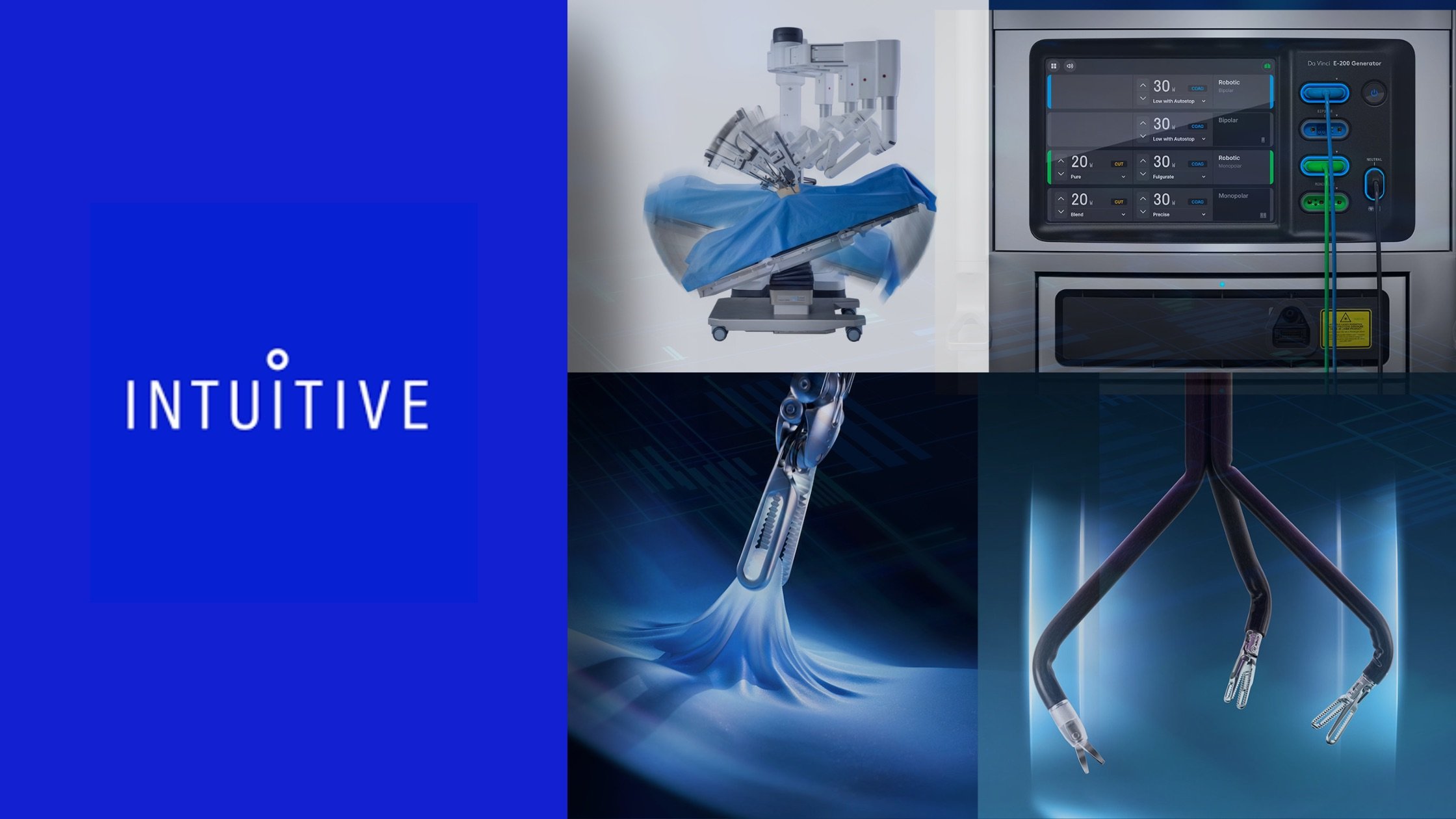
Engineering the Future of Care With Intuitive's Prabagar Sankar
Published by VentureFuel Team on
Apr 15, 2026 12:37:39 PM
Breakthrough healthcare technology means little if it never reaches real patients. What does it take to turn innovation into safe, scalable clinical impact?
This week's VentureFuel Visionary is Prabagar Sankar, Senior Engineer at Intuitive, a leader in robotic-assisted healthcare innovation.
With experience spanning wearable health technologies, medical device R&D, and clinical research across organizations like Sonova, Boston Scientific, and Drexel University, Prabagar dives into how clinician-engineer collaboration drives adoption and why the future of healthcare lies at the intersection of sensors, data, AI, and robotics.
%20Engineering%20the%20Future%20of%20Care.jpeg?width=760&height=428&name=Thumbnail%20(Podcast)%20Engineering%20the%20Future%20of%20Care.jpeg)
Episode Highlights
- Healthcare Innovation Is a Team Sport – Prabagar explains that breakthrough medical technology rarely happens in isolation. Real progress comes when clinical insight, engineering rigor, and regulatory discipline work together from the start.
- Closing the Gap From Lab to Real World – He shares that many healthcare innovations stall during the transition from research to deployment. Success depends on proving reliability, fitting into clinical workflows, and creating clear paths for adoption.
- Concurrent Engineering Speeds Safe Innovation – He also highlights how involving clinicians, regulatory teams, and engineers early in the process helps avoid delays later. This approach improves products faster while maintaining safety and effectiveness.
- Wearables Will Power Preventative Care – Prabagar believes continuous monitoring through wearable sensors will help shift healthcare from reactive treatment to proactive prevention. Smarter interventions could improve outcomes significantly.
- AI Needs Evidence, Not Hype – While excited about the role of AI in healthcare, he stresses that technology must be backed by strong clinical evidence. The real opportunity lies in combining AI, data, and sensing to solve meaningful patient problems.
Click here to read the episode transcript
Fred Schonenberg
Hello everyone and welcome to the VentureFuel Visionaries podcast. I'm your host, Fred Schonenberg. I'm so excited today to welcome Prabagar Sankar. Prabagar is a biomedical engineer and medtech professional working at the forefront of wearable health technologies and medical device innovation.
He currently serves as a senior engineer at Intuitive, where he contributes to the development of advanced healthcare technologies, building on years of experience across medical device R&D, health sensing, and clinical research. Over the course of his distinguished career, he has developed wearable health sensor technologies at Sanova, working on medical device systems and regulatory-focused development at Boston Scientific, all the way to contributing to NIH-funded therapeutic device research at Drexel University. He has built a deep expertise in translating clinical needs into practical healthcare technologies.
So today we're going to talk about the future of wearable health systems, medical device innovation, and how engineering and clinical collaboration are actually shaping the next generation of patient-centered healthcare solutions. Prabagar, welcome to the show.
Prabagar Sankar
Thanks, Fred. Thanks to you and your team for providing the opportunity. I'm looking forward to the great discussion.
Fred Schonenberg
As am I. And I'm really excited because if you've worked across startups, academic research, and major, major medtech companies from Boston Scientific to Intuitive, what drew you into biomedical engineering? And how has that journey taught you about how to actually build healthcare innovation?
Prabagar Sankar
Yeah, I think what really drew me into biomedical engineering was the opportunity to use and apply engineering principles or skills towards a problem of medical origin. So I was really fascinated and impressed by how technology could really impact patients' quality of life, as well as solve a real human problem. I think that's where my interest really started, and then it grew over the years.
So I think over the course of my career, I understood that healthcare innovation is rarely a straight line. It's not just about a breakthrough that happens overnight. It's more about collaboration between different cross-functional partners. What I've really learned is that successful healthcare innovation really happens at the intersection of clinical insight, engineering rigor, and then regulatory discipline.
I think it's very important to know how well you deeply understand the clinical need of the problem, how you could design technically and how robust it is, as well as how you can validate them through in order to make sure that it has the adequate safety and the effectiveness to treat the patients. I think it's when all these different things come together, I think that's when a technology can really move from a lab or a research to a real-world healthcare that directly impacts the patients.
Fred Schonenberg
Yeah. I'm newly obsessed with the idea of intersection and this idea that it's actually multiple things coming together that makes the opportunity now and right and scalable. And I think the other thing you shared is like there are no overnight successes, right?
Prabagar Sankar
Absolutely.
Fred Schonenberg
You just chip away, chip away, chip away, then another technology comes here and then all of a sudden it feels like it's overnight to anyone that has not been working on it for the past 10 years.
Prabagar Sankar
Yeah. It's years of clinical research, engineering rigor, and regulatory approach.
Fred Schonenberg
Are there any emerging healthcare technologies that you're particularly excited about right now?
Prabagar Sankar
Definitely. As you mentioned, the intersection of the advancement in robotics with the added capabilities now with AI, as well as data-driven insights, it's opening up the avenue for the next gen medical devices. I'm really excited about it. There's a lot of different things that you can do with it, right? It opens up the options for remote patient surgery where a surgeon could be in a different place to the patient and then they can remotely perform a surgery.
With the amount of data and the AI that's being used, as I mentioned before, I think it's the convergence of robotics, AI imaging, sensing technologies. I think this is going to drive the next gen of medical devices, which is going to enable precise diagnostics, more personalized treatments, and then better patient outcomes.
Fred Schonenberg
Very interesting. I think one of the things you've done that's super interesting to me is translate research, maybe early stage lab innovations into real medical devices. I'm curious, where in the process of innovation to scale, like real-world deployment, do you see healthcare stalling? Is there a common bottleneck moment or where things just don't make it into the real world?
Prabagar Sankar
In my experience, I think the major challenge has been the transitional gap from research to the real world. What usually happens is the companies in an academia or an early research stage would do studies more on testing their technology with a smaller population, smaller data set, as well as controlled environment.
There are several other factors that need to be taken into account when you have to go into the real world. There is reliability. The devices will be used in different scenarios. The device will be used by different patients. What's going to be the reimbursement pathway, as well as what's going to be the clinical adoption and market adoption?
I think it's very important to do early stage clinical validation to understand all these different factors, how these all contribute to the success of integrating into the real world. I think one part is understanding how the device works technically, but if it doesn't naturally fit into the clinical workflow, it's going to have a hard time with the adoption rate. You want to make sure that how clinicians deliver care is really important and is taken into account at the early stage of the design process. I think that's where I've seen most of the people struggle is really the transmission gap from the research to the real world.
Fred Schonenberg
I think it's such an amazing insight and also a challenge. It crept across different industries, this moment of academic or technical exploration to the commercialization piece where there's regulation, there's scale, there are customers, all that. The natural thought is, well, why don't you just pull the commercial part earlier into the process, but also that's introducing so much complexity so early that it slows the innovation and often kills a lot of it.
How do you navigate that tension of the immediate thought is just bring it earlier and then you're like, wait a second, nothing is going to make it across the line if we put too many restraints and too many cooks in the kitchen early on?
Prabagar Sankar
I think one thing that I've learned over my career is that it's very important to do concurrent engineering with respect to making all stakeholders align very early in the process. For example, you don't want to have your regulatory person come in later down the design process and then say like, hey, the design that we have doesn't work because of certain things that you have in the product and you now have to go and change. It's the same case with the clinician as well. It's very important to make sure these different stakeholders are involved a lot earlier in the process.
So the way I see a medical device development process is that it's a very iterative loop where the iteration happens, like you design and develop a product and then you give the product or your device to all your stakeholders and then make sure that they do the testing and evaluate and then take that feedback and then go back again and then redesign your product now with all these different feedbacks. As you mentioned, it's very important to make sure that you have to know at what stage, you don't want to bring the regulatory person at your innovation or brainstorming stage and then ask them about things which they don't have a say over.
So it's very important to know at what stage to bring in the stakeholders and then to give them a proof of concept and then say like, hey, this is what we are thinking about. This is the technology we will be using to solve this problem. Do you think what will be the regulatory pathway? What are the safety concerns that we need to take into account? And how can we reiterate and then make the product better?
Fred Schonenberg
It's really interesting. One of the things that we've thought about often is how do you help that early stage validation and testing and sort of R&D work, can that happen outside of your own four walls and then bring that into the larger organization? And I'm curious from your perspective of working with startups, for instance, and large healthcare companies, how do you make that partnership work? Is that something that you find valuable and then how does it work in theory and then in practice?
Prabagar Sankar
Yeah, that's a very, that's a great question. I think that's where most of the startups have troubles with. I think it's very important to understand what each of the players' strengths are and what they bring to the table. Startups are often very good at moving quickly. So they can experiment new ideas, brainstorm new ideas and then develop a breakthrough technology pretty quick. But whereas with a larger company, it's a different scenario altogether. They want to make sure they have clinical evidence, proper market adoption, proper regulatory strategy, and then they have expertise in all those areas.
So I think it's very important that you understand both of their strengths and weaknesses and then make sure that the expectations align. So one of the areas that I've often seen people have struggled with is when they have misaligned expectations. So startups always wanted to have this rapid adoption, go-to-market strategy pretty quickly. They wanted to say, oh, this is going to be the next big thing in the market right now.
But large companies are always calculative and careful with how they want to position as well as launch a product. They are more concerned about safety. We want to make sure that we strategize and then place a product right as well as we have the proper clinical evidence. I think it's very important to establish clear goals, set proper milestones, as well as make sure that there's transparency and communication between different teams with respect to startups or a larger company so that such partnerships don't occur later in the process.
I always felt that that's the best way to go about it because it's very hard for a startup with different expertise so they can always focus on the technology part and then they can collaborate with a larger company for all the regulatory market adoption, market strategy.
Fred Schonenberg
So obviously the world that you live in, medical devices, right? It's one of the most regulated industries you can think of, rightfully. How do you balance that need for innovation, that desire to break through with the more calculated safety validation regulatory approvals that are necessary, especially as a larger company? How does innovation ever get done, is sort of my question, within that environment?
Prabagar Sankar
I think one of the major goals with medical devices is that it's not about building something new every single time. It's about building something that clinicians can use and a patient can rely on. I think that always comes first. Safety and effectiveness of a medical device always comes above anything else.
So I think it's very important that safety and innovation need to go hand in hand together. They're not opposing forces, they're pretty much reinforcing each other. And I think most of us have different frameworks to do it with respect to medical devices. So there are design controls, there are verification and validation strategies as well as risk management techniques in order to prove and evaluate how safe a device is and stuff.
At the same time, it's very important that you integrate all these different aspects, right? You have the innovation portion, at the same time you need to evaluate how safe it is. I think that's where, as I mentioned before, the iteration process really helps out, having different stakeholders earlier in the process, making the testing with different people to provide you the feedback that is really needed in order to prove that your device is safe and effective.
It's very important because you need to build that trust among people to say that, hey, we could use our device and it's safe and it proves and helps you out with living a life without limitation. I think it's very important. And these two things, as you mentioned, along with the regulatory stuff needs to be taken into account earlier in the process rather than in later stages.
Fred Schonenberg
Yeah, I think it's so interesting that you used the phrase before, like concurrent engineering. And I think that idea of bringing this stakeholder, getting the stakeholders aligned, then bringing them in earlier and then running these paths concurrently. So you're not necessarily slowing the innovation, but you're making sure that it's thinking safety first and designing within the sort of frameworks that you've created, brings it to market quicker.
One of the things I'm really interested in is sensor technology. We've seen this across industries and I think everyone knows there's a sensor on everything it feels like. But specifically, you think about wearable health, clinicians monitoring patients and how healthcare systems are delivering care. Is this an area that you see advancing quickly, exploding? What do you think about that space?
Prabagar Sankar
I'm really fascinated about it, to be honest. I think wearable technology is going to be an integral part of the clinical ecosystem in the future, where we will be moving from reactive care into a more preventive, proactive and preventive care. I think the way in which I see it as continuous monitoring of vital signs outside hospitals can really shift, can make a shift in healthcare. Rather than just how we have been so far, we've always reacted to something once it happens.
So the way in which it's going to change is we will be now able to detect it earlier, as well as prevent it from occurring. I think the potential for all these physiological sensing and health technologies is immense. As I said before, I think it's going to play a major role and it's going to become a cornerstone in the clinical ecosystem with how clinicians and physicians are going to monitor the vital signs.
Fred Schonenberg
I could not agree more. It's an easy concept to think of as preventative, diagnosing problems early versus the reaction, but before all this technology existed, it's very difficult to do that and understand what's there. It's pretty cool. Is there anything you're seeing in that space that you're excited about or any other next generation devices or digital health that you think people listening should maybe start paying attention to?
Prabagar Sankar
Yeah, I think it's definitely, I still feel the continuous physiological vital sign still has a lot of potential and it's going to open up the avenue for a lot more in future. With the integration of a variable, as well as with AI and the data inside, it's going to open up the potential for a lot more that we can do with vital sign monitoring.
Not just from heart rate versus step counts, there's a lot more vital signs in the body that we can actually detect and predict, which would even with respect to serious diseases, there might be some biomarkers that we could actually detect with a variable, which could lead to preventing certain serious diseases. I think I'm really excited about this space because it's going to become an essential part of everyone's lifestyle going forward. Everyone is going to have some sort of a variable that's going to detect vital signs, as well as physiological sensing, and it's going to be a space where people will be able to take actions much earlier than later.
Fred Schonenberg
All right. Pardon me, I don't want to go down this road, but I'm curious about your thoughts. I know some people, I had dinner with a group of folks a little older than I am yesterday, and all they talked about was privacy and this idea of not, they were actually just talking about their personal information much less intimate than their vital signs, any biomarkers, things like that. Do you think that is going to block this innovation or is it going to be something like in five years, we all just go, hey, the reward is way bigger than the risk? Let's plug in.
Prabagar Sankar
Yeah. I think that's a very good question to ask, though. I think it's going to be a place where from what I've seen so far with respect to privacy, it's morally about the vital sign monitoring database that's going to be stored. It's not about meta information or personal information that is going to be taken into account. With respect to how clinical studies are performed now, it's very hard to have personal identifiers in order to make sure there is no bias.
I think that's how this whole database is going to be in the future as well with respect to wearable and sensing. You would be having a storage of all these different vital sign information. It's nothing to do with any personal information at all. As always, with respect to any new technology, I think it will become, it will slowly go through all its challenges in the early stages.
I think in my opinion, we are currently in the mid stage. There is still a potential for growth with respect to how wearables are. There are still some hesitations from people with respect to data and privacy and what the companies do with it. But I think, as you've mentioned, in five years, the reward for the wearables would be much higher than the other things that need to be federally effective.
Fred Schonenberg
I'm about to transition you over to our rapid fire session. So get ready. We're going to ask you a bunch of questions. We should probably have hooked you up to a wearable so we can see if this raises anything. It's funny.
I have a good friend who was a very early investor in Aura, the Aura rings. And so I got to try it really early and I loved it, but I was obsessed with it. I became so gamified and competitive with myself to get better sleep and all that. And in one way it was really good, but it was like, it was intense. Like I was competing to be more rested, right? It's like, how do I relax more? And it's like, well, maybe stop thinking about it all the time. So it'll be interesting to see what unexpected changes to human behavior happen as part of this more frequent sensing.
Prabagar Sankar
Absolutely. I think, as I mentioned, it opens up potential opportunities to certain things, which I've never thought about before, which was possible when I was a kid.
Fred Schonenberg
Yeah. It makes it fun. Anyway, I'm going to give you a couple quick questions. Give me your gut answer on them. So the first one is what healthcare problem are you most passionate about solving?
Prabagar Sankar
Definitely early detection and diagnosis of very serious diseases. I think identifying them earlier would lead to people having a better outcome.
Fred Schonenberg
What's one misconception people have about medical device innovation?
Prabagar Sankar
People often think breakthrough happens overnight, but it's years of clinical research, engineering, and regulatory work.
Fred Schonenberg
Is there a skill that is consistent across medtech innovators? Is there something you all share?
Prabagar Sankar
I think it's the ability to bridge engineering techniques and principles with a real clinical lean.
Fred Schonenberg
I love that. What technology in healthcare is most overhyped right now?
Prabagar Sankar
Uh, definitely AI solutions, which promise transformations without strong clinical evidence.
Fred Schonenberg
What is most underhyped?
Prabagar Sankar
Uh, continuous physiological signal sensing as well as health technologies.
Fred Schonenberg
What role will data play in the future of healthcare? We kind of talked about that one. I think, uh, I think we covered that actually. Uh, it's going to be the, it's going to be the base, the foundation, right?
Prabagar Sankar
Yep. It's going to be the foundation and the cornerstone for the future healthcare. I think it's going to help in shifting from a reactive to proactive here.
Fred Schonenberg
What do you think is the biggest barrier to innovation that established companies face?
Prabagar Sankar
I think it's really more about the different layers added to it. Sometimes if you don't do concurrent engineering, it stalls the progress. It's very important for companies to do concurrent engineering to push products out of control here.
Fred Schonenberg
What advice would you give engineers who want to build real world scalable healthcare solutions?
Prabagar Sankar
Spend more time understanding deeply the clinical problem and the patient needs rather than just the technology.
Fred Schonenberg
What startup idea in health, in healthcare would you, do you wish or would love to see someone build?
Prabagar Sankar
Definitely integration of a variable with predictive data analysis along with the data insights. I think that would be really cool.
Fred Schonenberg
So what impact do you hope that your work ultimately has on patients and the world?
Prabagar Sankar
Help live a life without limitation.
Fred Schonenberg
I love it. Well said. Thank you so much for taking the time to chat with us today. It's been a complete pleasure and I wish you a great rest of the day.
Prabagar Sankar
All right. Thanks, Fred. I think I really appreciate the opportunity to thank you and your team for giving me the opportunity.
VentureFuel builds and accelerates innovation programs for industry leaders by helping them unlock the power of External Innovation via startup collaborations.
Tags:
Innovation,
podcasts,
Data,
Venture Capital,
AI,
Healthcare,
VentureFuel Visionaries,
Robotics,
healthtech,
AI in Healthcare,
Engineering,
Sensors