
The Future of Building Intelligence With QEA Tech's Peyvand Melati
Published by VentureFuel Team on
Jun 4, 2026 3:42:52 PM
The next wave of infrastructure intelligence is turning physical spaces into continuously analyzed systems. How will decision-making evolve when buildings generate their own operational data?
This week's VentureFuel Visionary is Peyvand Melati, Founder of QEA Tech. He explores how AI, drones, and thermal imaging are helping property owners, infrastructure leaders, and municipalities uncover hidden energy waste, identify critical risks, and make smarter decisions about the built environment.
In this conversation, Peyvand also shares how building intelligence is transforming the way organizations inspect, maintain, and decarbonize their assets. Whether you're responsible for sustainability, facilities, infrastructure, or innovation, this episode offers a practical look at how technology is reshaping the future of the built environment.
%20VFI%20Visionaries_The%20Future%20of%20Building%20Intelligence.jpg?width=760&height=428&name=Thumbnail%20(Podcast)%20VFI%20Visionaries_The%20Future%20of%20Building%20Intelligence.jpg)
Episode Highlights
- AI-Powered Building Intelligence at Scale – Peyvand explores how drones, thermal imaging, and AI are combining to digitize building envelopes and process thousands of data points per structure in under 24 hours.
- From Reactive to Preventative Maintenance – He explains how buildings can now be monitored for issues like air leakage, insulation gaps, and facade risks before they become costly failures, with some fixes showing payback under 12 months.
- Unlocking Energy Waste in Existing Infrastructure – The conversation highlights how older buildings, especially pre-1980s assets, represent major untapped energy-saving opportunities through targeted, data-driven interventions.
- Turning City Data into Actionable Insights – Peyvand shares how cities can move from fragmented assumptions to digital twins and real-time visibility across thousands of assets to support decarbonization planning.
- Scaling Climate Impact Through Measurable Actions – He also tackles how AI shifts sustainability from reporting to execution by prioritizing high-impact upgrades across large building portfolios.
Click here to read the episode transcript
Fred Schonenberg
Hello everyone and welcome to the VentureFuel Visionaries podcast. I'm your host, Fred Schonenberg, and today I'm so excited to be joined by Peyvand. He is the founder and CEO of QEA Tech, which is an AI-powered climate tech company, which is transforming how buildings are inspected, optimized, and decarbonized. He's able to combine drone technology with thermal imaging and machine learning to help cities, property owners, and infrastructure leaders reduce energy waste and build smarter, more sustainable environments.
Most recently, QEA Tech won TomorrowCity's Startup City Pitch Competition, which was in partnership with VentureFuel. It was this past April in West Palm Beach, and it recognized the company's groundbreaking work shaping the future of urban infrastructure and energy efficiency. I'm really excited.
We're going to dive into how AI is changing the built environment, the future of smart cities, and what it's going to take to scale climate innovation in this rapidly evolving world. So please enjoy. Peyvand, welcome to the show, sir.
Peyvand Melati
Thank you. Thank you for having me, Fred.
Fred Schonenberg
I appreciate your patience with our tech issues early on, but beyond my intro, I was wondering for anyone that has not been exposed to QEA Tech yet or hearing about you guys for the first time, could you introduce the company and also maybe a little bit about your founding story?
Peyvand Melati
Absolutely. So at QEA Tech, we use drones and AI software to find energy-saving opportunities in the exterior of the buildings. The story of how we came up with this idea was that we did market research. This idea, I shouldn't take credit for. My co-founder came up with this idea, but we did a market research back in 2018 to figure out what kind of data is available on the structure and exterior of the buildings.
This is the largest asset in any portfolio building is the envelope or the exterior of the buildings. And we found that there is very little data. We have a lot of assumptions, we have a lot of engineering drawings, but we don't have actual data on how the exterior of the building behaves from an energy point of view and also from a risk mitigation point of view. So that was the motivation for us to start this, come up with a technology that we can collect this data at scale and non-intrusive.
Fred Schonenberg
And then can you talk a little bit… One of the things that I found very special the first time we came across your company is that you're combining a bunch of really interesting technologies to get this data and deliver the risk mitigation. It's AI, it's drones, it's thermal imaging. Can you talk maybe a little bit about how those come together and work in practice and how it differs from maybe the way traditional building inspections happen?
Peyvand Melati
Absolutely. So I characterize our company as a tech-enabled company that disrupts an older way of collecting this data. So traditionally an engineering company, to collect or inspect an exterior of the building, we need to put scaffolding and basically look at every inch or every foot of the exterior of the building visually, and then come up with a report. There is a very standard engineering report around inspection of the exterior of the building.
And then on the other side, we have energy modeling that is based on assumptions of what was built of the building and how the energy performance of the exterior of the building should be. This process is quite manual and very costly and timely to do this. So perhaps one of the reasons that we don't look at the building envelope on the whole energy saving of the building is because it requires a lot of time and traditionally.
So what we did is we looked at how we can collect this data fast. When we started, we had a lot of problems. Drones were not as easy to use as we have today. The very first project that we did, we needed to close a very major street in downtown Toronto just to be able to fly the drones around this tower. So there were a lot of regulations, a lot of red tapes, but we had the vision that drones are the way of the future and these regulations will be relaxed. We couldn't fly drones in, let's say, downtown Manhattan, midtown Manhattan for sure.
At that time, we needed to get to the NYPD, we needed to get a lot of permits to fly drones. So this was a lot of limitation, but we were believing that the drone is the way to go to collect the data. There were other technologies like a crawling robot or other, but all of those don't have the advantages that drones have.
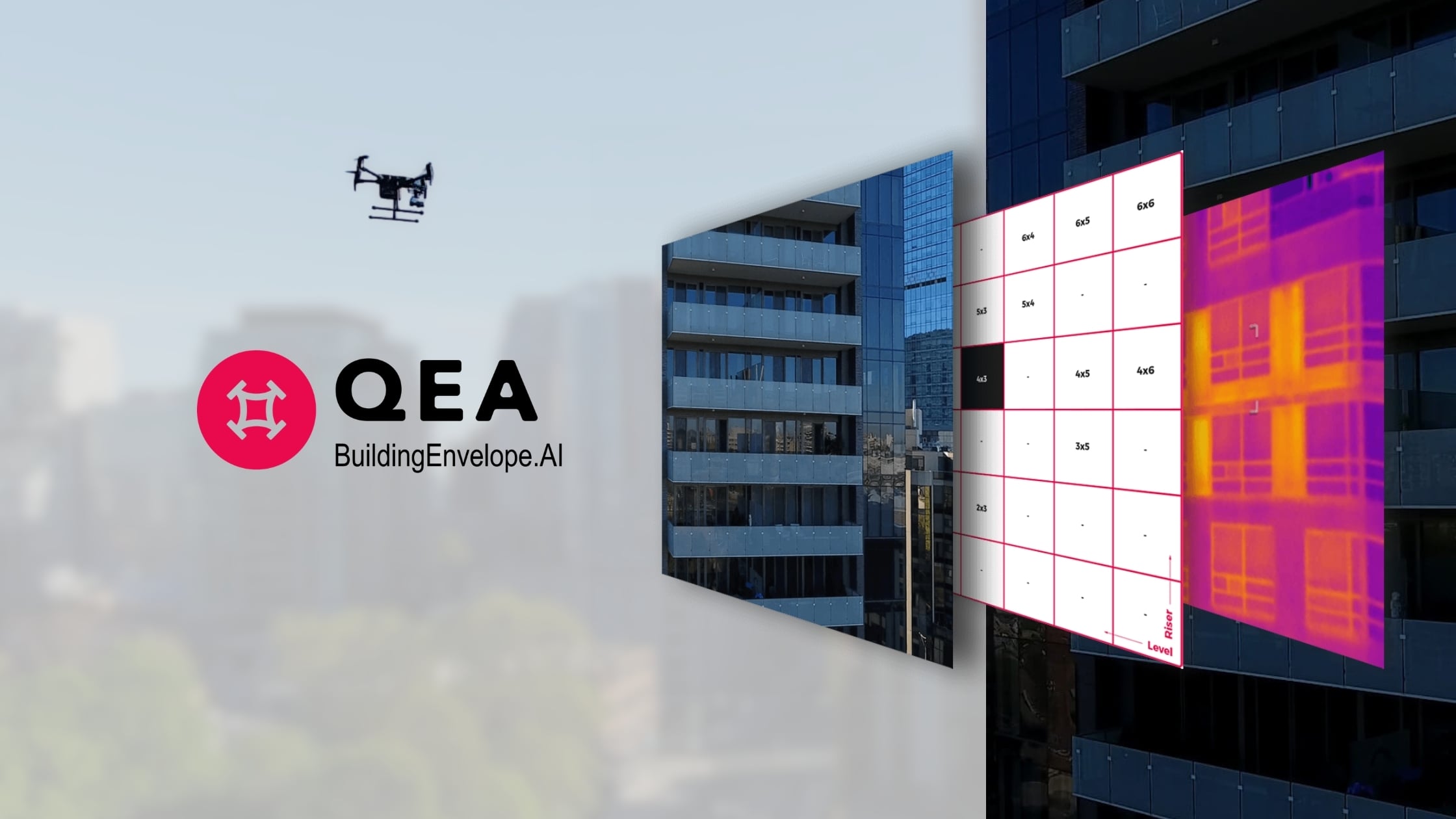
The other thing is we can collect a lot of data. In our technology, we can collect thousands of data points. These are high resolution visual images and infrared images that we can collect within an hour of flight in the morning and an hour of flight during the night. But what do we do with this data? How long does it take to process? That's where the AI comes from, how fast we can ingest these thousands of data points and create actionable data. These technologies are coming together for us to be able to go in and out of a skyscraper in 24 hours and provide actionable data to them really quickly.
Fred Schonenberg
I think what's so interesting is that when we think about disruption points in a business, we often say what parts of the process are either dull, dangerous, dirty, or something that is cumbersome. And to me, the idea of people getting on scaffolding, physically walking up to a roof, examining it literally by walking it, filling out manually almost with a clipboard, this report and engineering, it's just one of those things you look at and go, oh, yeah, that has the opportunity to be automated in some way.
What I think is really interesting here is the drone enabled the quick snapshot. You have the thermal imaging to give you the depth and the sort of insight that's there. Then AI to speed all that up and automate it. And together, it's a completely different product and experience. I think this idea of the smart envelope and the building envelope becoming something where data is accessible and helping people make faster, more informed decisions is just such a wide open opportunity, both for the building owners, but also for the cities in which these buildings exist.
Peyvand Melati
Absolutely, absolutely. I always say that the building envelope is like the unwanted child of the sustainability programs. People, they don't want to touch it because they think that there's not enough data. It's hard to change the building envelope or longer paybacks or stuff like that. But with our technology, we can bring data really fast and inexpensively for them to understand where the low hanging fruits are.
You don't need to change the entirety of the existing exterior of the reclad the whole building. How can you target it, fix that and achieve your sustainability targets? Or if there is a specific risk in the body of the building that it can turn into a huge project in the next five years, understand it and have preemptive measures to prevent it.
Fred Schonenberg
Yeah, that's so interesting, right? Sometimes it's like, oh, I don't know what's up there. So we're just going to redo the whole thing or more so. I don't know what's up there. We're going to wait till something happens to do it. And I think that's from the business owner standpoint.
I think what's really interesting is you, and I mentioned this in the intro, won the TomorrowCity USA startup pitch competition just a couple of weeks back and VentureFuel facilitated that. We brought you in and then we had really expert judges across large enterprises like NVIDIA to municipalities, the CIO of different cities come and look at all these different startups and help judge. It was almost like a shark tank, if you will. And you all got through that process and the various different judges at different stages and were crowned the winner.
And I'm curious, what did you learn about your company through that process? And what does that recognition mean to you and your team? Because I think one of the things for me looking at it is, and I got a cool seat in that I got to sit with the judges as they were deliberating, they were saying what you just said, which is like, hey, this is very interesting for building owners, for groups that own multiple buildings, but also from a city standpoint, wow, could we change the sustainability approach that we have? Because we can see where energy is escaping either on large facilities, our own facilities or the city overall. So I'm just curious. I know I just asked you a whole bunch of questions in one question. What did the recognition win and what did you learn from the process?
Peyvand Melati
I think, first of all, it was a tough competition. Like the shortlisted or the finalists were really good companies. I was really impressed. And also the pitches, the founders were really mastering in pitch. So to be honest, I was quite nervous before the final prize announcement. But it's a big recognition that having those industry leaders from municipalities or the industry on the panel, on the judges panel was a big recognition for me and my team that this technology matches all of the tough criteria that you put in the judging sheets that I got back.
I think it showed us that this is a technology that can scale fast. What is interesting for many people is building envelopes by itself. It's a slow process. The data on a building envelope doesn't change in milliseconds. It changes in months and years. But it's the largest asset of the building. And if you don't take action, it might create a huge risk financially in the portfolio of assets. I think what was really interesting for me and for our team is to show that this technology can change the future of the cities, make it more resilient and more sustainable, both of them.
We have a lot of talk about resiliency of the buildings, especially in Florida and areas that are prone to weather events. And then we have a lot of concerns about energy saving and the body of the building and energy intensive portfolio buildings like hospitality, like hospitals and northern territories or northern states that require a lot of heating and what have you. And this is a crucial part of energy saving. It's not an easy task. It's not as fast as changing LED lights or heating and cooling, but it's not something that you can ignore.
And having the data in your hand, what you're creating is so visually easy to see. We make a digital twin of the building. We put all the anomalies on it. So for the building owners, there's so much aha moment I've seen across these 1,500 projects that we've done so far, which just shows that we can scale it. And also from the municipalities and the cities point of view, a lot of them, they have targets for 2040 or 2050 decarbonization, net zero target.
But from an architectural point of view, we don't really have data. What do we need to do for that? A city like Boston, they will have the entire 70% of the buildings that they have today in 2050. These are all existing buildings that it's going to be with us in 2050. What we need to do from an architectural point of view really requires this data that we're collecting.
Fred Schonenberg
I think that's so interesting because buildings are such a major contributor to emissions and energy waste and it reminds me a lot of the advances in health tech, right? This idea of preventative medicine of getting a scan to see if you have a proclivity for certain things. Essentially, you're looking at the buildings and saying, hey, here's where the gaps are that are really important to close today. But by the way, these are the pain points and the problem areas that if not paid attention to can become a big issue. So maybe you should change your diet, right? It's got that type of feeling of understanding where you are and what you need to work on as a building owner or a city.
Peyvand Melati
Absolutely. Absolutely. The preventative measure in this case is quite important. And I vividly remember one of the very early projects that we did back in 2020. We showed the property owner that there is ice accumulation behind the stone slabs on the facade of a very, very important building across a very important street. So there was a chance of those slabs coming off of the building. And that was a no-brainer for the building owner to give us the entirety of the portfolio just to prevent this specific risk. So it's a very slow process, but the risks are huge. We cannot ignore it.
Fred Schonenberg
So there was so much conversation at that conference and in a lot of different areas right now around smart cities, AI driven infrastructure. You're very much in the middle of this, both with QEA Tech. And then I know you're also engineering background, venture investing, and tech commercialization. I'm curious what you think a truly smart and sustainable city is going to look like in the next five to 10 years.
Peyvand Melati
I think we're getting there to collect a lot of data now. We're installing a lot of sensors and what have you. I think the future of cities is data driven. So we need to have, we need to collect a lot of data, but more importantly, how can we turn this data into action? And that's what excites me because now we have access to this AI tool that can ingest millions of data points and give us action items on it. This was not available with what we had five years ago. So this is something the future of the smart cities are.
Obviously, we are continuously putting more sensors in every corner of the city that you go, you see more data that's been collected. But what excites me is now we have the tool to turn this into action. These actions could be some sort of actuation at the level of sensors or a policy that we can make at the municipalities, how to make usage of energy or the traffic or whatever basically our target is more smart across municipalities. That's super exciting when I see the AI that can… going through a data classification of it and usage of it, it would have taken months and months. Now we have a tool that can turn it into minutes. This is quite exciting.
Fred Schonenberg
It's super exciting. I have a sort of off the cuff question for you. What I was thinking about as you were talking is this data action is so important, but some of these initiatives can feel far off, right? You mentioned that it changes over months and years. And so there's an old saying sort of in a venture capital point of view, which is vitamins versus painkillers. So when you see the ice accumulating behind the legacy building that is very important and there are people below, you take action. But if you see energy leaking or a small potentially down the road problem, it's hard to move on it, right? It feels like a problem you can deal with down the road.
What advice do you have if you're talking to a municipality, right? Like these guys have so many constraints on their budget. Are you able to kind of show like, hey, we're going to give you the full landscape of data and information you should know, but we're also going to give you those immediate action points that you can then talk to your constituents about where they can help move these numbers. Like, how do you move from information to action?
Peyvand Melati
I think we're privileged now that we've done 1500 projects. We have a very healthy set of data on different kinds of buildings and we have an understanding of the trend and the low hanging fruits that immediate actions justifies immediate actions.
Traditionally, when we talk to engineering companies, they say, okay, recladding, usually it has a very long payback time or these are done only for the sake of beauty of the building or for the sake of end of life on a part of the building. But our data shows that there are low hanging fruits that we don't need to change everything. So if there is air infiltration around windows or doors, shipping doors in industrial buildings or skylights, this payback time is usually less than a year in air infiltration. If there are buildings that were built prior to the 70s or 80s that don't have insulation in the walls, we have plenty of those. And you have these innovative solutions that you can inject foam into the wall, the payback time is quite short on those.
There is technology that is coming up that we put window inserts inside. So you can add another layer of glazing from inside of the building without demolishing and do all of that. So there is a lot of technology coming. We have coating technology that you just spray on the roof and you reduce a huge amount of energy on just being a reflective roof. On the windows, you can put a film that increases the emissivity of the windows and saves.
So none of these are the traditional recladding of the entirety of the building envelope, but we are showing these solutions that are the low-hanging fruit. Many times you need to change the roof or reclad the whole buildings, which has to be done. But there is a lot more for municipalities to take action on, to create incentive for the owners to take action on it, besides traditionally what we know about building envelopes.
Fred Schonenberg
I also would imagine for cities, in particular municipalities, knowing when they need to change out the roof, if they do need to do a big project. It's like almost having an advanced warning of when they might need to do that and budget for it versus the moment when the roof caves in and they've got to go find the money for it.
Peyvand Melati
Absolutely. So roof is, especially on low-rise industrial, any kind of campus type of building, roof is one of the largest building elements. So most of the energy loss is through building elements, through roofs. And also most of the risk associated with the exterior of the building is in the roof. So to the point that we've created a specific version of our software that only works for roofs and special AI models to find risks in the roof, so we could do this at scale and much larger.
For the cities, especially cities that are prone to weather events like hurricanes and hailstorms and whatever, this becomes crucial to have this data, understand from a city that has, I don't know, 10,000 or 10 million roofs. What percentage of them are close to the end of life? What sort of leakage are we expecting? What is the resiliency from this most important building element overall in the neighborhood or a section of the city? I think that it is very important to have this data and prevent a lot of problems. When this weather happens or just naturally, the leakage on the roof is something that's a nightmare of any business owner or property owner.
Fred Schonenberg
It's so true. I want to switch gears a little bit here and kind of end. We do this thing on the show called rapid fire where we ask you a couple of questions to get your gut instinct. But before I get to that, one of the things that strikes me, I mentioned your background. I know you're involved with a number of startups. I get exposed to so many different innovative ideas, great new technologies with the idea of climate tech improvement.
And they sort of get stuck oftentimes in the ideation where they get quick buy-in from people that are very excited about climate but then when they need to commercialize. It gets harder because at the end of the day, they need big companies to be involved. And big companies are focused on ROI. Certainly, there are some that are very responsible and think about sustainability goals. But at the end of the day, they have an obligation to their shareholders to generate revenue. What advice would you give to climate founders or climate tech founders on turning their ambitious ideas into real scalable businesses?
Peyvand Melati
I mean, the main thing, and especially on climate is more important, is to understand the problem. What is the pain point that you're solving? Is the problem big enough? The one that you're solving, is it big enough? Like you said, there is what I call a honeymoon period in every startup. At the beginning, you have a solution, you have a prototype. And there is an early adopter that adopts it as a very low scale, one or two of these. And usually, it is a moment of celebration, but it's something to be celebrated.
But you have to be very careful at that point that those couple of projects, early adopters that usually adopt this technology to some innovation fund or something, that's not real customers. Real customer is when they actually put a budget for you for doing it across their portfolio or scaling it at that point. A lot of this is the value of death. I usually call for the founder because they're going from making a prototype to a larger scale deployment, which is a whole different ballgame. It depends if you're a deep tech, you have to look at your cash flow.
If you are a software company, you have to understand that these building owners or whoever is in the stakeholder, they're bombarded with hundreds of these technologies. And you need to be able to convince them that you are the person that solves this problem. And in general, this is coming from my investment hat and on the early stage companies as the most important thing that I'm looking for in a founder is grit. Can they face all of the externality problems that they're going to face and just go from that prototype to the scale and all of the problems that's going to happen? Sometimes your timing is not good for your customers or sometimes your technology is good at the lower scale, at the higher scale, you have all kinds of problems with it. But can you have the grit to pivot, to fix those problems and scale it?
Fred Schonenberg
Yeah, no, it's true. Its grit is one of the most underrated things to evaluate, especially in an early stage company. So let me do that. So I'm going to rapid fire, give me a quick gut instinct on these questions. So the future of cities… of smart cities.
Peyvand Melati
I would say if I want to say one word, the answer is connected. Everything needs to be connected in the future of the cities and from the data point of view.
Fred Schonenberg
What do you think is the biggest game changer, AI, robotics or clean energy?
Peyvand Melati
I think it's AI by far. It will change every aspect of our life. But the one that we're very behind is robotics. We need it the most. We're talking about it, but we're behind on that.
Fred Schonenberg
I will say recently I've gotten very excited about robotics, which I hadn't been for a very long time. And I actually think it's robotics and AI coming together. That is pretty, pretty interesting.
Peyvand Melati
We are talking a lot about super intelligence and singularity points and stuff like that. We're missing so much tactile data in this world that we're not getting that without having the robots or collecting these tactile data in the world that we don't have. We’ve a lot of data on the internet that we've put on for the past 20 years or so. But that part is missing. We're far behind on that.
Fred Schonenberg
Yeah. What do you think is the most sustainable city right now?
Peyvand Melati
I can just go by what is available on the web. That's Copenhagen.
Fred Schonenberg
I love it. What's one technology you wish existed that hasn't been created yet?
Peyvand Melati
Selfishly, I would say in my business, I would love it if I could have drones that are less than 200 grams and they can take the data that I want. Because then I don't need any license to fly drones. And I'm hoping that that will come.
Fred Schonenberg
How do you want QEA Tech to be remembered?
Peyvand Melati
The AI company in everything building envelope.
Fred Schonenberg
I love it. Peyvand, where would you like listeners to go to learn more about QEA Tech?
Peyvand Melati
Definitely our website and our LinkedIn channel is quite active as well. We're just launching our new website next week. I want to invite all of your listeners to go and see. We have a lot more data on our new website that is coming up next week.
Fred Schonenberg
Well, thank you for your time sharing with us today. I have to say, after meeting you a couple of years back, watching how the company has grown and then going through the process of the TomorrowCity competition and seeing the judges' questions. And we have people from all different stages of organizations, municipalities, technical savviness, all trying to pick you apart.
And I came away from that believing more and more that QEA Tech is an opportunity for municipalities and cities, building owners to very smartly understand what is happening on the building envelope and to take action. I loved your comment about data to action and making the changes that are necessary to build a better future for all of us. Thank you for all the work that you are doing and for going through all the process and I’m encouraging everyone listening to check out the QEA Tech website.
Peyvand Melati
I appreciate it. Thank you very much.
VentureFuel builds and accelerates innovation programs for industry leaders by helping them unlock the power of External Innovation via startup collaborations.
Tags:
Innovation,
Technology,
podcasts,
Startups,
AI,
VentureFuel Visionaries,
Urban innovation,
Smart Cities,
tomorrowcity