
Unlikely Entrepreneurs — Harvard Business School Professor Lou Shipley
Published by VentureFuel Team on
Dec 17, 2025 10:48:23 AM
Curiosity, ambition, and determination often matter more than pedigree or perfect planning. Are we underestimating the power of unconventional thinking in entrepreneurship?
This week’s VentureFuel Visionary is Lou Shipley, a Harvard Business School professor. He has led multiple startups to breakout growth ($100M+) and major acquisitions to companies like Citrix and Synopsys. He has also taught some of the most in-demand sales and GTM courses at HBS and MIT.
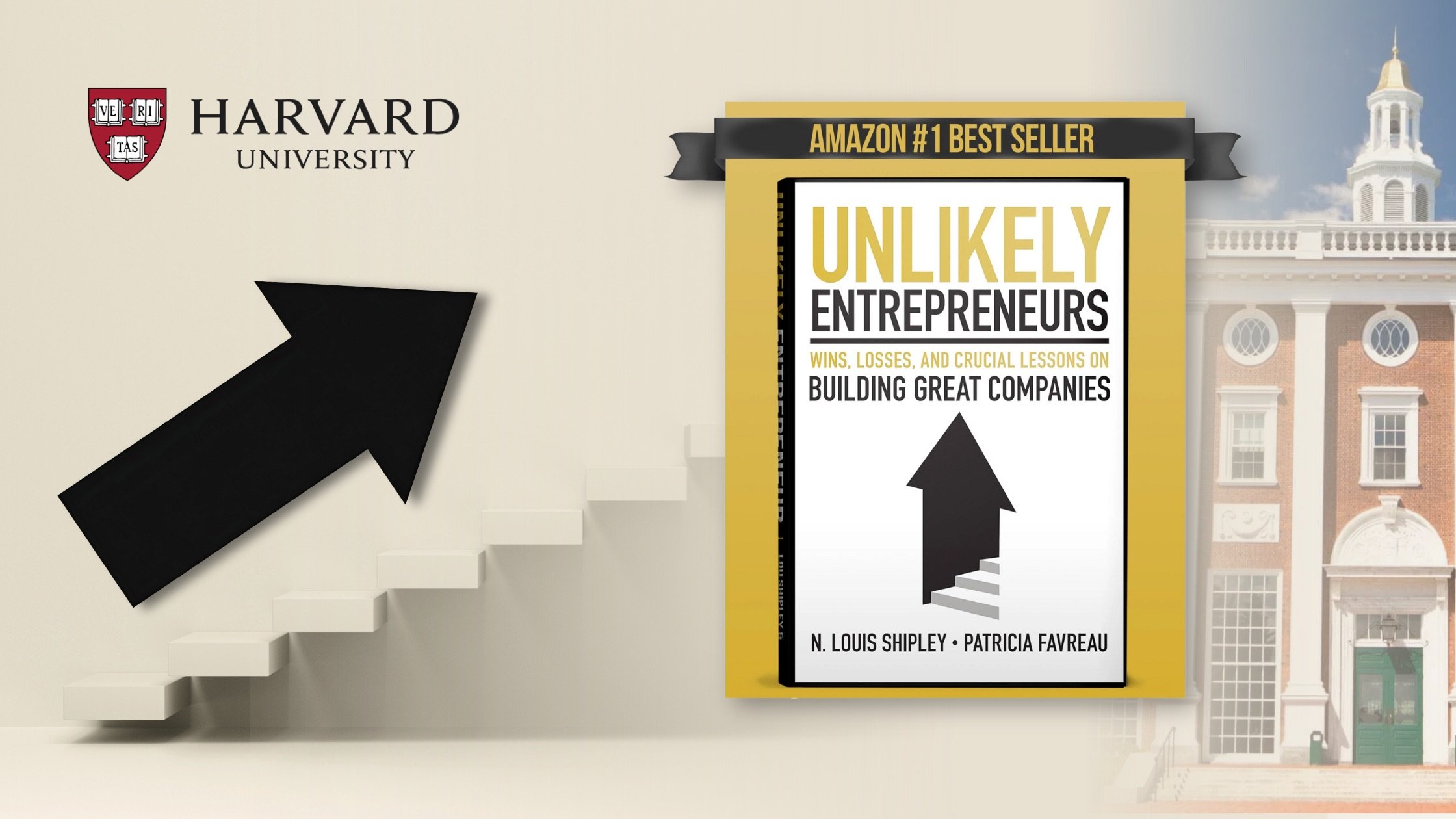
In this episode, we dig into the core traits behind Unlikely Entrepreneurs — the title of the new book he co-authored — and why unconventional founders so often win through curiosity, ambition, and determination. He also breaks down “the problem with the problem,” why the sled only moves as fast as the lead dog, and the essential role founders play as keepers of culture.
%20VFI%20Visionaries_Unlikely%20Entrepreneurs.jpg?width=760&height=428&name=Thumbnail%20(Podcast)%20VFI%20Visionaries_Unlikely%20Entrepreneurs.jpg)
Episode Highlights
- Early Sales Training as a Career Catalyst – Lou explores how selling door-to-door in college created a practical foundation in handling objections, reading personalities, and developing resilience — skills that later shaped a path toward high-growth startups.
- Fixing Culture to Unlock Growth – He discusses how shifting a company from “lifestyle mode” to a true performance culture became the turning point in a major turnaround, including rebuilding the leadership team and making culture a strategic focus.
- Teaching Sales as a Core Business Skill – The discussion highlights how structured sales education at top business schools helps future founders overcome misconceptions about sales, equipping them with the fundamentals to run real campaigns.
- Unlikely Founders Driving Real-World Innovation – Lou emphasizes how impactful businesses often come from people outside the stereotypical tech-founder profile, including operators in unexpected industries like caskets and tire shops.
- Curiosity and Ambition as Common Threads – He also points out that unconventional entrepreneurs consistently share traits like curiosity, ambition, and the willingness to test if their ideas can hold up in the real world.
Get early access to Unlikely Entrepreneurs! Pre-order here.
Click here to read the episode transcript
Fred Schonenberg
Hello, everyone, and welcome to the VentureFuel Visionaries. I'm your host, Fred Schonenberg. Today's episode is a real treat, not just because our guest is one of the most accomplished leaders in enterprise tech, but because he's also a longtime member of the VentureFuel community and a fellow graduate of Trinity College. I've had the privilege of watching Lou mentor founders in our Comcast NBCUniversal LIST Labs Accelerator, especially across some of our AI cohorts, and every time he brings this incredible mix of sales expertise, clarity, and generosity.
A little background on Lou, he led Reflectant Software to a successful acquisition by Citrix. Then he helped drive VM Turbo from zero to nearly $100 million in revenue. And he transformed Black Duck from a struggling business into the global leader in open source security, ultimately delivering a high-profile acquisition by Synopsys.
Today, Lou is a Harvard Business School professor teaching some of the most sought-after sales and go-to-market courses, which when I first reached out to Lou, I was like, why do they not teach this more in business school? So I was pretty excited about that. He sits on several high-growth boards. He's the co-author of a new book entitled Unlikely Entrepreneurs, which distills decades of leadership lessons from within the trenches.
Today's conversation is going to be all about what it really takes to scale, reinvent, and lead, especially when the odds might not be in your favor. So I'm super excited to jump in. Lou, welcome to the show, sir.
Lou Shipley
Great. Thanks, Fred. Thanks for having me.
Fred Schonenberg
So, alright, multiple exits, sales guru, Trinity College grad, published author. When you look back, can you maybe talk through some of those defining moments that nudged you from what I would say would be a more traditional path on Wall Street into this entrepreneurship sales world?
Lou Shipley
Yes. So, Fred, why don't I take it back to Trinity? Because between my sophomore and junior year, my financial aid budget had gotten changed and I needed to find a way to make some dough. So I started selling books door-to-door with the Southwestern Book Company. I did it with a couple of other Trinity people. And you'd start knocking on doors at 8 a.m. in the morning at 7:59 and you'd finish at 7.59 p.m. And you learn about handling objections, you learn about dealing with difficult personalities. It was a great experience. So I did it for two years and helped pay for college.
Fred Schonenberg
I’d like to say that we’ll never start this podcast with what I was doing during my sophomore year at Trinity. So I appreciate you were out knocking on doors. I'm not sure I would have welcomed you depending on what time you knocked. But I love that as the beginning of the sort of find your path, make your own way, right? And some of the sales lessons to get learned there.
I mentioned a couple of different startups that you've led through transformation and successful exits. Are there any core leadership principles or mindset shifts that seem to be universal across those kinds of different journeys?
Lou Shipley
Yeah. I mean, I think and we talk about this, my co-author, Trish, and I talk about this in our first chapter. The first chapter of the book of Unlikely Entrepreneurs is called The Problem with the Problem. And what it is, is a very succinct way to think about the problem you're thinking of solving worthy of building a company.
And we profile a number of different really interesting entrepreneurs in the book. The chapter leads off with Bill Warner, the founder of Avid Technology, who had a real problem trying to create a video using analog technology film and videotape. And he digitized the process and process revolutionized an industry with Avid Technology.
That was my first startup, Fred. And it went through explosive growth, zero to 500 million in about five years. I moved to Japan, ran in Asia Pacific. Once I had been in one really fast growth startup, I was never going back to the big corporate jobs, just in a way.
Fred Schonenberg
Yeah. I always joke that there's an energy around high growth entrepreneurship that just can't be found in other places. So once you get close to it, it's really hard to go back to any other sort of nine to five type of living. Can you talk a little bit about the Black Duck turnaround? Were there any specific decisive actions that looking back moved the needle for you all kind of revitalizing that business that maybe the folks listening could learn from?
Lou Shipley
Yeah, you know, when I was looking, I'd left Turbo and was looking for another CEO gig. And I was just about to sign with another company. And I got a call from my friend and mentor who'd been the chairman of the board of Citrix and was the chairman of the board of Black Duck and Tom Bogan, a very successful guy. And he said, the Black Duck jobs open. I knew about the company because I had used Black Duck service to scan reflectance code when Citrix bought us to find out how much open source is. And I thought this is a pretty cool company.
Tom said, you know, the CEO jobs open. But he said, you know, the company has some culture problems. I just kind of whizzed past that because he mentioned it two or three times. And then I realized when I got in there, started running it, the company had culture problems. So, ultimately, we did three big things at Black Duck. We came out with a security product. We changed our go to market strategy. It was very scalable.
But most importantly, and the hardest thing to do, but the most defensible thing we did was we changed the culture. We changed it from sort of a sleepy lifestyle company to a fast growth, entrepreneurial growth business. It's so important to talk about how culture matters so much in a company because the people you bring in, retain and who they attract is what really defines your business over time and can become your competitive differentiator.
Fred Schonenberg
Can you talk a little bit about that moment? Because culture is one of those things that's a little bit hard to define. You kind of know it when you see it, you feel it, right? But how do you make a shift there from that sleepy lifestyle into the high growth mode? Is it about getting the right people in the right seats? Or what was… how did you attack that as you realized it was an issue?
Lou Shipley
Yeah, my first few weeks there, I remember calling one of the board members, Larry Bond, who had led the investment from General Catalyst and said, Larry, this is a lifestyle company on a peacetime footing. And if you want me to stay, that's going to change. It's no longer going to be a lifestyle company because you don't grow 100% year over year running a lifestyle business. You need people that understand growth and maybe had experience with it before.
So the most important thing, Fred, you need the best team, period, full stop. The person with the best team wins. And so the first thing I took, took me a couple of years, but we really built, built a great team and senior level team. We promoted some people. And then, and then on the culture front, we created a culture that was fun, but I would call it sort of a performance culture where you learned a lot. Everybody knew there were expectations for performance.
If you didn't hit the performance expectations, you wouldn't stay. That's fine. That's the deal. But we also created a learning culture where people felt like, you know, my boss values me, I'm learning. And then the stock options, the benefits and the salary and bonus, any company can do that. But I think if you can really build a culture where you feel like you want to bound out a bit, I want to go to the office. That's such a differentiator. If you want, if people really want to come to work and don't see it as just a job or drudgery.
Fred Schonenberg
Yeah. I feel like we could spend the whole podcast on this because it's, I think for anybody that's been in a company where they either have led that or have been a part of that, it is just a different energy. And it's a really hard thing to kind of put your finger on what makes it so, how to maintain it, how to grow it. But if you've been in it, it's that feeling where I think some people look at the clock on Friday afternoon and go, gosh, how many more hours so I can hit the weekend? And others look at it Monday morning. They're like, let's go. Let's go.
Lou Shipley
Exactly. One of the things that I did that was, that I still to this day, I'm very proud of is I created a role called VP of Culture. I promoted a guy named Tim Kenney who had been at the company for a long time. And by the way, every company sort of has its own keeper of the culture. They may not have that title, but they're kind of the people that hold everything together and know that creation stories. We made Tim VP of Culture, so it has senior staff every week. It would be house sales, house product, house culture in Boston, London, San Jose, Tokyo. We worried about it and I think the people in the company felt like they are focused on how we feel while we work. So they became a real differentiator for the company.
Fred Schonenberg
Really cool. So one of the things when we first got connected, you've taught thousands of future founders at HBS about sales and go to market, which are two areas that consistently trip startups up, especially at a school like Harvard, where there's the academic idea of starting a company.But when it gets down to sales, I'm not a salesperson. Why did those functions remain so misunderstood? Are there any insights from the classroom that now inform you as you teach the next generation of founders?
Lou Shipley
Yeah, thanks for asking that, Fred, because I taught both at MIT and at Harvard. Both have a lot of students who are very entrepreneurial. For the longest time, business schools didn't have sales courses, and every company had a top line. It's sort of cooler to talk about strategy, finance, and marketing. Salespeople think, "Oh, that's a skill." Or, not only that, you either have the sales gene or you don't. You can't learn this.
I think what we've created, Mark Roberge, my co-teacher and I, is an e-sales 101. It's the core sales class at HBS. We created a way for the students, in half a semester, to overcome their disdain and fear of sales. We teach them how to run through a sales campaign, and each student gets a sales coach from Mark's and my network who listens to their experiential assignment role plays and then coaches them on how to get better.
By the time they're done with the class, they feel like they can go out and make a sales call. They know what sales is. It's been really fun, and there are now 450 of the 900 students at the school in the second year taking that class. It's become very popular, and it's also not, you know, there's sort of a trade school aspect to sales. Like, oh, you don't want to go to Harvard Business School to learn sales. The reality is you're selling no matter what you are, whether you're a sales rep or a CEO or a board member or somebody like the CEO of Venturefield, you're selling.
Fred Schonenberg
All the time. Yeah, it is. It's one of those, it's either, you know, you are or you're not. Right. And it's every role at all times. You're at a conference and you meet somebody you're selling. It's very interesting that there is that disdain, though. I remember coming out of Trinity early on. I liked sales.
Lou Shipley
Yeah. Someone else. Yeah. It's not for me.
Fred Schonenberg
Yeah, exactly. It's so interesting. So your new book with your co-author, Unlikely Entrepreneurs, I love the title, distills lessons from founders and leaders who don't fit the typical mold. What inspired you to write this? Why now? What's the gap you feel needs to be filled?
Lou Shipley
Yeah. So, Trish, actually, it was her idea. She called me. We had worked together at MIT, and she said, you know, I think there's an idea for this concept of an unlikely entrepreneur. And what we didn't want to do, as she asked me — we'd worked together, because I assume, you know, a lot of my people said, yeah, I do.
I've spent my entire career working with entrepreneurs. So let's find some, and I can show you some very, very interesting ones. I sort of sourced them and wrote up the initial review of what the story is. But Trish is a great storyteller. So she took the profiles and really spun the story of these entrepreneurs. And not that there's anything wrong with Silicon Valley billionaires. I love them. But what this is really about is people that might live around the street corner from you who are starting businesses — either unlikely businesses, like Scott Ginsberg, who started Titan Caskets, the largest online casket seller in America. I mean, it's amazing. He completely disrupted the funeral industry by selling caskets online, giving customers a much better, cheaper deal than a funeral home would.
We also have a woman who lives around the corner from me who runs an independent tire store. And in the chapter title, it starts, "Oh, isn't this your husband's business?" Well, no, it's her business. It's a woman in a man's business, but she's crushing it — Mary McLaughlin. So we just wanted to shine a light on a lot of these different people that you might not have heard of, but who are really driving job growth and innovation, and their stories are really compelling and unlikely.
Fred Schonenberg
It's really interesting because there's so many different unconventional career paths into entrepreneurship. I wonder if there's anything based on the research and the interviews that you entrusted. Are there any traits or behaviors that show up in these unlikely entrepreneurs? Like, is there a through line across them, even if they're everything from caskets to tires to AI and tech? I'm just curious if there's anything that you find is sort of a common thread.
Lou Shipley
Yeah, there are. And I'd say curiosity and sort of ambition and curiosity, and also thinking. I think I could do this and wondering if my idea really would hold water and be a real, really good company. The other thing that came up as we went through this, one of the chapters is called "Entrepreneurship as a Second Act," where we profile people in their 40s and 50s who have started businesses because the research out of MIT shows that the best age for the most likely success of an entrepreneurial venture is age 44.
So we still have this notion that you've got to drop out of Harvard to start your business because of Zuckerberg and these really successful people. But the reality is the data shows that if you're a little bit older, you already have a network, and you may not be paying for three kids in school. You might have a little bit of extra money, which makes you likely to be more successful.
We profile a guy named Dave Piccarello who had a very successful business career, but he really wanted to start a brewery, Twin Barns Brewery, which he started up in Meredith, New Hampshire. Terrific story. And the guy's been very, very successful. It's been really fun to tell his story. That's kind of what we wanted. We wanted to tell the stories of these people that you may not have heard about.
Fred Schonenberg
Very cool. Is there a particular story or research that came from the book that surprised you? You've been around founders for so long. I'm sure you've seen all different founders, different types of companies, great ideas, disruptions. But curious is, as you dove into this, was there anything that reshaped how you think about entrepreneurship?
Lou Shipley
And what sort of surprised me was it sort of dovetails with my work at both MIT and Harvard is how you're not born with the entrepreneurial gene. You're not born with the sales gene. These are things that you can learn. If you're determined to do it, you can learn these things.
In my HBS class that I teach with Mark Roberge, we have this, we bring in an expert named Sam Nelson, who has the students go through a script and then cold call people to sell pizzas. And the students always are like, there's no way I'm going to read a script. There's no way I can cold call someone, try and sell them a $20 pizza. That's just not going to work.
Sure enough, every year out of a class of 90, about 12 kids, 13 kids sell pizza, just making a cold call. So what's interesting is they realize, oh, this isn't that hard. I can pick up the phone and call somebody because that's really where sales starts.
Fred Schonenberg
It's so interesting. I mean, it's such a barrier to that moment, right? Because there's all the fear of rejection and, or this is beneath me or whatever it might be. And sometimes it's taken a couple shots, like a little bit of reps and realize this isn't that hard. But also there's a real art to it, which is interesting.
Lou Shipley
Well, it's not only bad for it. I think it isn't as hard as you think it is. The upside is that when you actually make a sale, I can remember back to the door-to-door book sales days when I was at Trinity. If you went a whole 12-hour day and didn't sell a book, which happened, I called it a character-building day. You just had to get up the next morning, realizing it may be a better day.
Sure enough, when you close a deal, it's such a powerful feeling. Especially in startups, if you sell something that doesn't really exist, it's sort of an idea. When you do, other people, a company looking and going, "Fred can do that." Like maybe Fred can do some other things. So sales is a great first step into coming into a company. You can prove that you can do it, and then you often get promoted. That’s sort of my experience during my time at Avid Technology when I started.
Fred Schonenberg
Yeah. I feel like we could rename this podcast "Accidental Sales." I came out of Trinity, intending to be a writer, and I had a boss. I had written a copy for their website and materials, and he asked me to go on a sales call because their salesperson didn't show up. I was hesitant, but he said, "Just go. You already wrote the materials; you know it. We have no one else." I went and explained what we did.
They asked, "Is your fax number on your card?" This is how old I am now, right? I replied, "Yeah, it's right there." They said, "Okay." I drove back, and when we returned, they had faxed the order in. The CEO of the company handed me a commission check. I was like, "What?" I came back and thought, "I don't know; I just talked about what we did." He said, "Well, we got a deal. By the way, here's your cut." I realized, "Oh, the sales thing is pretty interesting."
Lou Shipley
Well, we profile a guy named Matthew Riley in the UK. We have mainly US entrepreneurs. We have Swedish UK and Italian entrepreneurs as well. Matthew started as a typewriter repairman. And he was looking around. It's like the people that made all the money we're selling. So he figured he saw a fax machine to your point, figured out how to sell it. Now he's a billionaire and he just overcame his fear of sales and learned how to do it. And he built his company Daisy group in the UK. It's a tremendous story, but it's because he leaned into it. He doesn't even have a college degree. He just learned how to sell and manage people.
Fred Schonenberg
Wow. All right. I'm going to get you out of here on two questions. The first one may feel like a little bit of a pivot, but as you know, we work with a lot of fortune 500 companies, helping them think about innovation and looking outside their own four walls, looking to external technologies and startups in particular.
So I sit with CEOs of public companies most of the time, right? And they're thinking to themselves, how can I instill entrepreneurship in my people? How can we avoid disruption? I'm curious what advice you can base it on the book or any of your teachings would you have for a larger company executive that is recognizing it's time to innovate maybe beyond their, their legacy core.
Lou Shipley
Yeah. So interesting that you asked Fred, because one of the entrepreneurs we profile started later in life is a guy named Charlie Tillinghast who had been the president of MSNBC News Interactive and grew that business. One of the services called Breaking News was a service that he built up. When MSNBC went through a merger and broke up with Comcast, they closed that business down.
And Charlie's like, I think I can recreate that. They changed the business model from advertising base to subscription base, but he basically took everything he'd learned while working in a large company and started his own business called Factal, which is doing very well now. But I think the story is about entrepreneurship and a story is about, you know, basically having entrepreneurial values while you're in a large company. I think back to the culture piece, some large companies still really do feel entrepreneurial and give their employees sort of that sense of ownership and risk-taking and judgment on their own to go create new businesses.
Fred Schonenberg
Yeah, I love that. It is really interesting when you go to different organizations, you can feel the culture, especially at large companies and that over time they've built that. And it's a hard thing to move and change for them, but there are some that just maintain that sort of day one vibe where people are moving quickly and seizing opportunities and working with curiosity.
Lou Shipley
Yeah. We have chapter four about leadership. It's entitled, the sled goes as fast as the lead dog. So I do think leadership needs to, you know, basically demonstrate these values for people to really believe in them and be happy to become part of real culture. Not just a: here is my mission statement or mission values. It's gotta be really visceral and people have to feel it to have it really drive into the culture.
Fred Schonenberg
I love it. Lou, if there is anything I didn't ask you about that I should have, is there anything for any entrepreneurs listening that you'd like to share about the book? And then we're going to be able to share a link so people can get the book in advance. We'll put that all in the notes, but just curious if there's any other sort of parting shot or lesson that you'd want our listeners to hear.
Lou Shipley
Well, it's not just a lesson, but, you know, given that we're both Bantams from Trinity college, we do profile a couple of other Trinity people, John Mollner, who's married to Katie Couric, they started Katie Couric Media. So it's kind of an interesting, unusual situation where even with celebrities, when they start their own business, if it's a public failure, it's pretty nasty.
So we tell their story about how they built a company, Liz Elting, another Trinity, one who started her business out of a dorm room and built it into a, you know, a billion dollar valuation company, TransPerfect. So I sort of love bringing it back to where we went to college, where I sort of had my first entrepreneurial experiences and I'm telling those stories, but there's about 17 different entrepreneurs with a variety of stories, either unlikely backgrounds, unlikely businesses, or unlikely scenarios.
Fred Schonenberg
I love it. I got to give you this Trinity story on the way out. Last year, Trinity won the basketball national championship and I played basketball at Trinity.
Lou Shipley
Oh, you did? I didn't know that.
Fred Schonenberg
I did. Yeah. And we were the last, we were the first team to make it to the final four of the Trinity basketball team. So I was watching with sort of, you know, alumni interest, but I was at the University of Michigan with some friends. And so we were watching the NESCAC live stream from Ann Arbor. It was such a weird moment. Like if you had told me 20 plus years ago that I'd be watching Trinity basketball on an app in Michigan, I'm not sure I would have believed you.
Lou Shipley
Well, it was in 15, they won the national hockey division three. I was out, I was one of, I think, three alums that went to Minnesota to watch that game.
Fred Schonenberg
I'd love it. Well, Lou, thank you so much for taking the time to share about the new book. We will of course promote it. Any Bantams listening, we got to get it. As well as all the entrepreneurs out there. I've watched Lou talk to founders and there is a practicality and generosity about him that you all can learn from. So I'm excited to see the book and thank you for taking the time.
Lou Shipley
Okay. Thanks for it. Thanks for having me. Good to see you again.
VentureFuel builds and accelerates innovation programs for industry leaders by helping them unlock the power of External Innovation via startup collaborations.
Tags:
Innovation,
podcasts,
Startup,
retail,
VentureFuel Visionaries,
Founders,
Entrepreneur,
visionary,
Business,
Entrepreneur Empowerment,
Entrepreneur Support,
sales,
Harvard University